

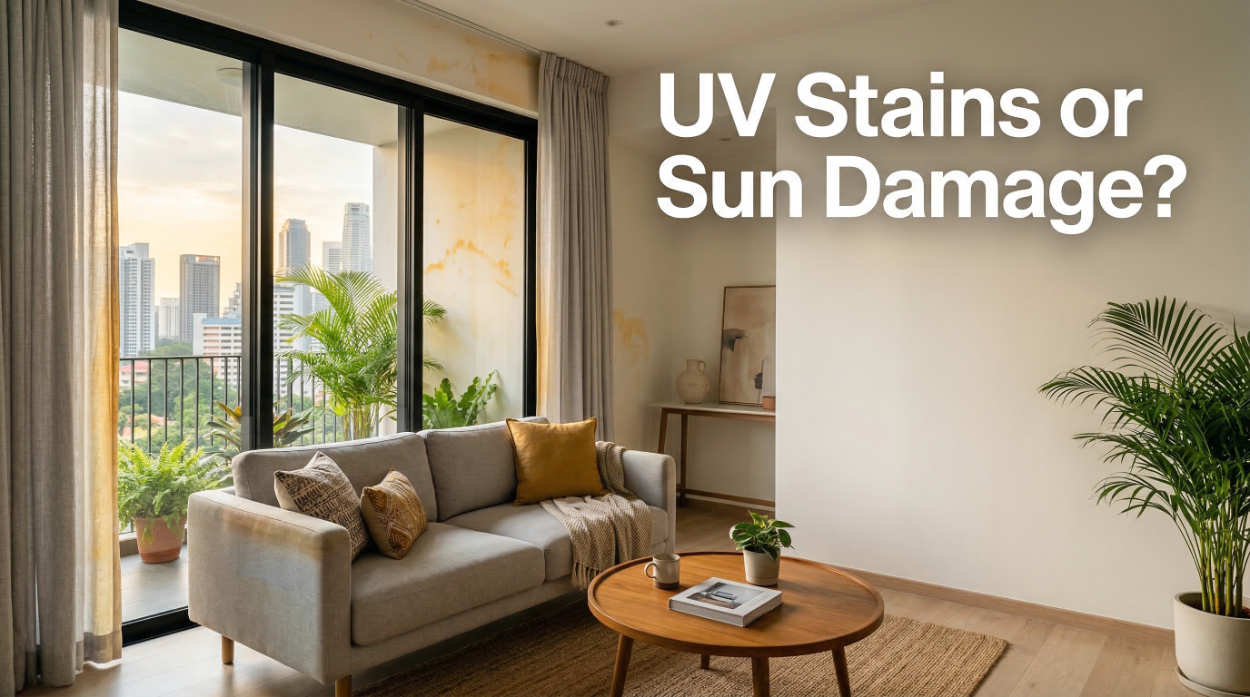
A patchy yellow mark beside your window is not always “dirt.” In Singapore, it is often a mix of strong sunlight, heat, trapped dust, oxidised residue, and actual material fading. That matters because the fix is different. Some marks can be cleaned. Some can be improved. Some are permanent surface change and no amount of scrubbing will magically undo them. Singapore’s UV index commonly reaches Very High and Extreme levels around 11 am to 3 pm, which helps explain why sun-facing walls, curtains, sofas, carpets, and car interiors take a beating here. (National Environment Agency)
EasyClean SG already offers UV Stains Removal as a named service, alongside mould removal, upholstery cleaning, carpet cleaning, and other specialised cleaning work across Singapore. That is a useful clue in itself. In real homes, these problems often overlap. A mark near a window can be UV-related, but it can also include dust, residue, moisture, or mould in the same zone. (Easyclean SG)
What are UV stains and why do they show up so often in Singapore?
UV stains usually appear as yellowing, patchy discoloration, or faded sections on walls, fabric, leather, vinyl, and carpets near windows or other sun-hit areas. In Singapore, strong year-round UV exposure, indoor heat buildup, and everyday dust can turn a simple-looking mark into either a removable residue problem or permanent surface fading. (National Environment Agency)
What people call a “UV stain” is often one of four things. First, there is surface residue baked in by sunlight. Second, there is oxidation or yellowing of paint, coatings, plastics, or synthetic materials. Third, there is uneven fading where exposed sections lose colour faster than shaded parts. Fourth, there is a mixed problem, where sun exposure combines with dirt, moisture, or mould. Research on UV exposure shows solar UV degrades many natural and synthetic materials over time, and NEA’s UV guidance confirms Singapore regularly sees very high UV conditions. (PMC)
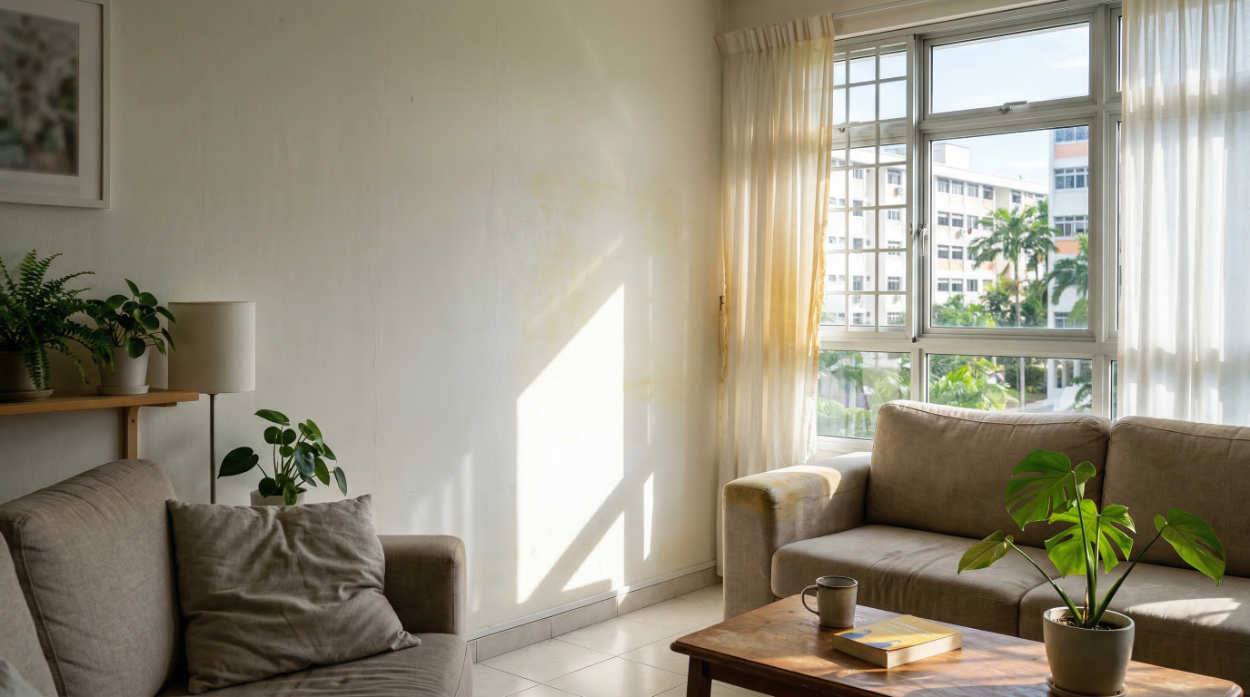
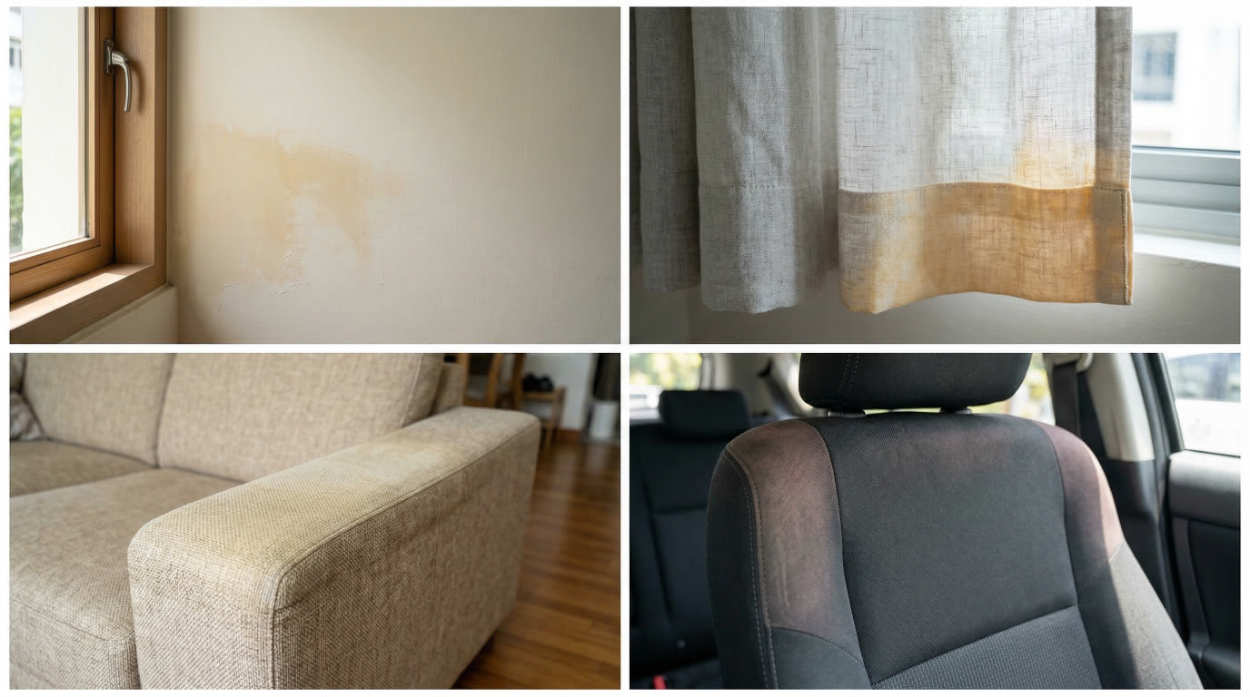
That is why the same room often shows the same pattern. The side of the sofa facing the balcony door looks tired. Curtain edges near the glass look yellower. A white wall beside a west-facing window becomes uneven. A carpet strip near the sliding door looks older than the rest. In cars, the dashboard, seat shoulder area, and door trim usually show it first because they sit under direct light and heat for long periods. These are location clues, not random accidents. (US EPA)
UV stain, mould, dirt, or fading? How to tell the difference
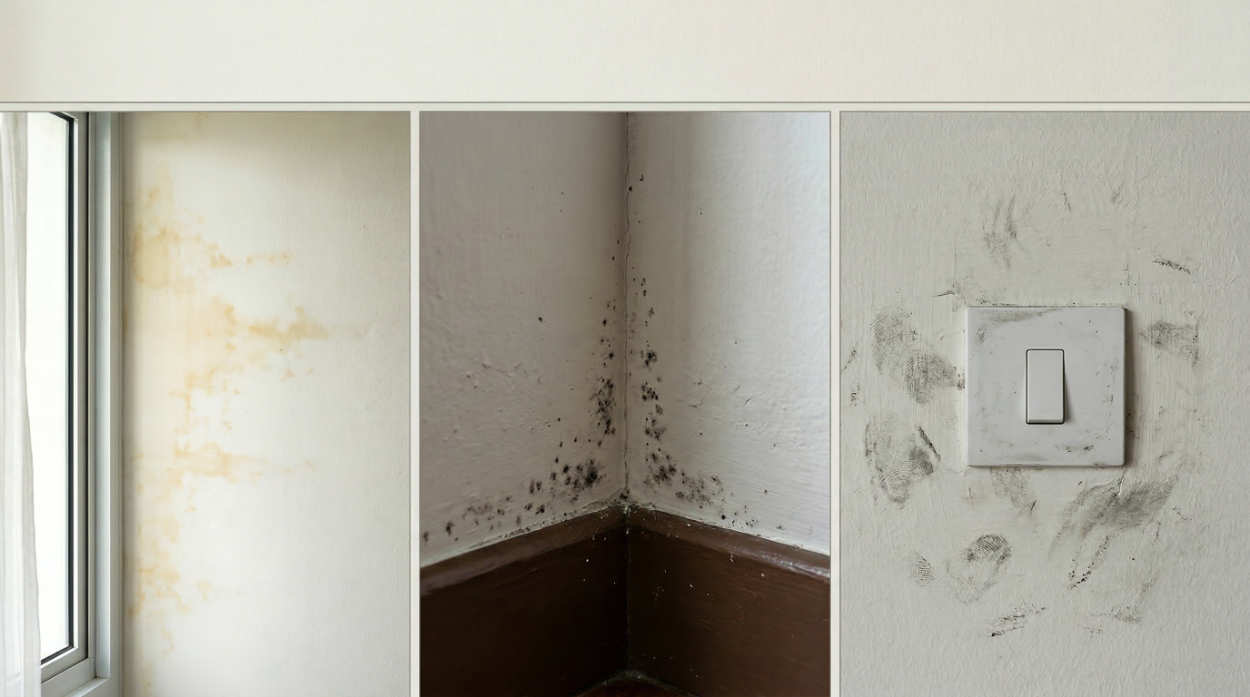
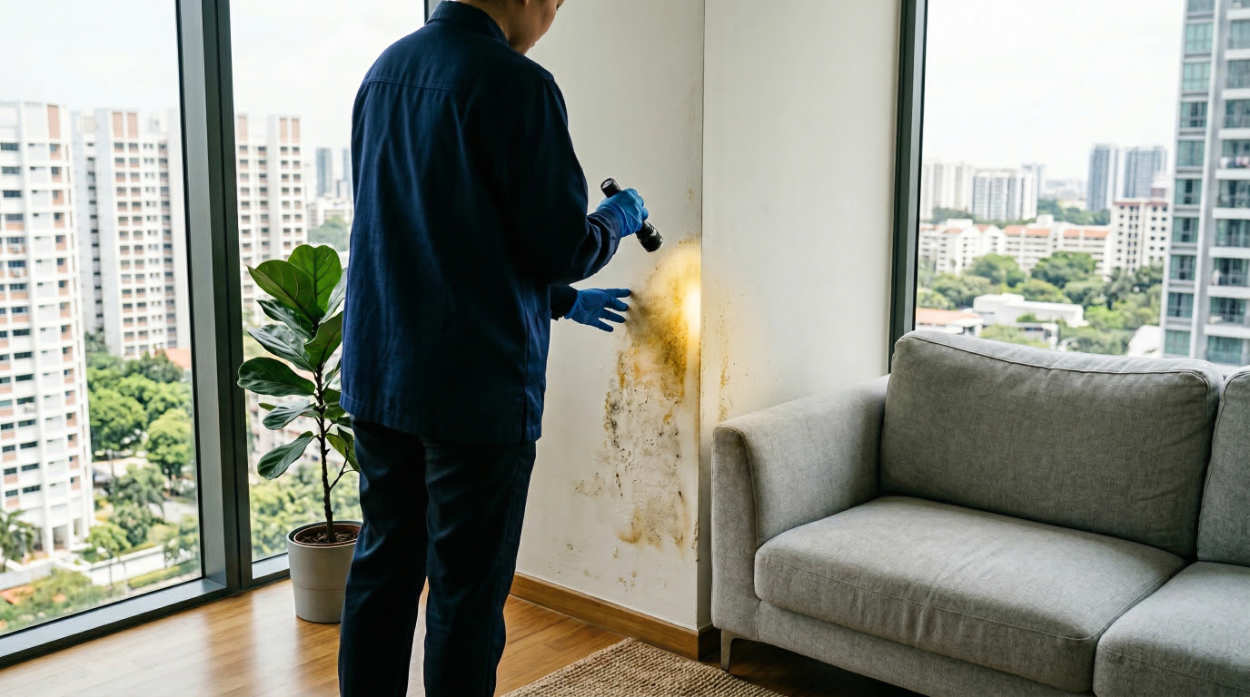
The first check is location. UV-related issues usually show up where sunlight lands often and for long periods. Mould is more likely in damp, shaded, poorly ventilated areas and often comes with a musty smell. CDC notes mould can appear as coloured spots and usually needs both cleanup and moisture control. So if the mark is on a cool shaded corner behind furniture, UV is less likely to be the main villain. (CDC)
The second check is surface feel. If the mark feels greasy, sticky, dusty, or slightly rough, there may be removable buildup on top of the material. If it feels exactly like the surrounding area but looks lighter, yellower, or patchier, you may be dealing with fading or oxidation instead of a removable stain. This is where many DIY attempts go sideways. People scrub harder when the problem is actually the surface itself changing. (PMC)
The third check is edge shape. Spills usually have more defined outlines. UV damage tends to look softer and broader, following the line of the window, curtain opening, or sun path. On walls, it may appear as a rectangular or angled patch where light repeatedly hits. On fabric, it often shows on exposed folds, top edges, or armrests. On carpets, it can track the edge of a glass door. (US EPA)
A practical Singapore rule is this. Sun-hit zone plus no smell plus no residue often means fading or oxidation. Sun-hit zone plus grime or dust film may still be treatable. Shaded damp zone plus spotting pushes suspicion toward mould. (CDC)
Which surfaces can be treated and which ones may already be permanently damaged?
This is the part most pages skip. Not every UV mark is removable. A good assessment separates what sits on the surface from what has changed inside the material.
| Surface | What you may be seeing | Can cleaning help? | When cleaning may not be enough |
|---|---|---|---|
| Painted wall | Yellowing, patchiness, baked dust | Sometimes | Oxidised paint or uneven fading may need repainting |
| Curtain fabric | Edge fading, yellow cast, brittle look | Sometimes | Dye loss and fibre damage are often permanent |
| Upholstery fabric | Lighter armrest or seat edge | Sometimes | Sun-faded fibres rarely return to original colour |
| Leather or vinyl | Dullness, yellowing, stiffness | Sometimes | Coating breakdown or cracking needs restoration or replacement |
| Carpet near glass door | Bleached strip, uneven tone | Limited | UV-faded fibres do not “wash back” to original colour |
| Car interior trim and seats | Dash fade, seat shoulder discoloration | Sometimes | Heat and UV can permanently alter plastics and dyes |
The best candidates for treatment are surfaces with surface residue, embedded dust, oils, or grime that became more visible after UV exposure. Upholstery cleaning, steam cleaning, carpet cleaning, and other specialised cleaning services make sense here, especially when EasyClean SG already handles these adjacent categories. (Easyclean SG)
The weakest candidates are surfaces where the pigment, coating, or fibres have already broken down. A faded curtain edge does not usually “clean back” to its old colour. A sun-bleached carpet strip will not become new again because shampoo was applied. A wall with oxidised paint may look better after surface cleaning, but the final fix could still be touch-up painting or repainting that section. Research on UV damage to materials supports this. (PMC)
DIY UV stains removal methods that are safe, and the mistakes that make things worse
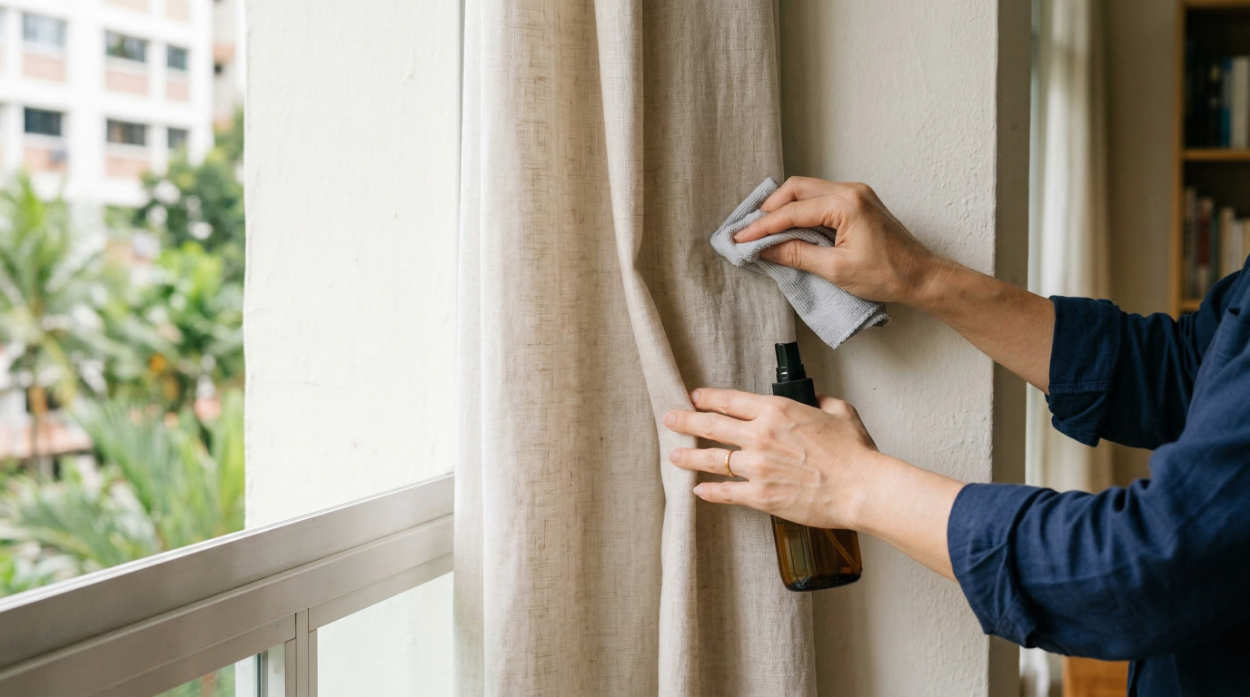
Start small. Always test a hidden spot first. Use a soft microfiber cloth and the mildest suitable cleaner for the surface. For fabric, light blotting beats aggressive rubbing. For walls, start with a barely damp cloth and very gentle pressure. For vinyl or leather, use a product made for that material, not an all-purpose kitchen cleaner. The goal is simple. Find out whether there is removable buildup before you attack the finish itself. (Easyclean SG)
What usually makes things worse is overconfidence. Harsh chemicals can strip paint, distort fabric colour, dry out faux leather, or leave water marks on walls. Over-scrubbing can create a cleaner-looking patch in one spot while making the surrounding faded area look even more obvious. Bleach is especially risky because it may brighten one area but can also worsen unevenness or damage the material. (PMC)
A useful stopping point is this. If the mark does not lift at all with gentle cleaning, feels fully integrated into the surface, and matches a clear sun-exposure pattern, you are probably not dealing with normal dirt. That is the moment to stop before you turn a repairable problem into a replacement problem. (PMC)
When professional UV stains removal is worth it
Professional help is worth considering when the affected area is large, highly visible, delicate, or expensive to replace. That includes feature walls, sofa sets, custom curtains, carpets, landlord handover units, and car interiors. EasyClean SG already positions itself around specialised cleaning services, including UV stains removal, upholstery cleaning, carpet cleaning, and mould treatment, so the service fit is logical when the cause is unclear or mixed. (Easyclean SG)
The real value is not magical chemistry. It is correct diagnosis. Is this removable residue, embedded dirt, light oxidation, mould crossover, or permanent fading? That answer tells you whether to clean, restore, repaint, or replace. For many homeowners, that saves money because it avoids throwing effort at the wrong fix. (CDC)
A practical use case in Singapore is pre-handover or pre-viewing. Patchy walls or faded soft furnishings near windows can make a unit look older than it is. A professional assessment can quickly tell you which areas are worth treating and which ones need cosmetic restoration instead. That is a better outcome than spending a weekend scrubbing a wall that really needs paint. (Easyclean SG)
How to prevent UV stains from coming back
The first lever is sun control. The U.S. Department of Energy notes window films help block solar heat gain, glare, and ultraviolet exposure. In Singapore, that matters because NEA says UV levels commonly hit Very High and Extreme ranges around midday. Even simple changes like better curtains, blinds, or UV film can reduce damage on walls, upholstery, and carpets near windows. (The Department of Energy's Energy.gov)
The second lever is rotation and spacing. Shift furniture slightly away from direct window paths. Rotate cushions. Change curtain positions. Do not leave one side of a rug taking all the sunlight month after month. Small changes reduce those obvious “one strip old, one strip new” contrasts. (US EPA)
The third lever is regular cleaning before heat bakes residue in. Dust, skin oils, airborne grime, and city residue can make sun-hit areas look worse. Keeping surfaces cleaner reduces the chance that a removable surface issue becomes a stubborn visual defect. For homes where this already overlaps with moisture or musty areas, mould control matters too. (CDC)

FAQ about UV stains removal in Singapore
Can UV stains on walls be removed completely?
Sometimes. If the problem is surface residue or baked dust, cleaning may help. If the paint itself has oxidised or faded unevenly, cleaning alone may not restore the original look. (PMC)
Is UV staining the same as fading?
Not always. People use the phrase loosely. Some “UV stains” are removable buildup. Others are true fading, yellowing, or coating breakdown. (PMC)
Why do I only see the marks near my windows?
Because UV and solar heat exposure are strongest there, and Singapore often reaches very high UV levels around the middle of the day. (National Environment Agency)
Can steam cleaning fix UV marks?
It can help where grime, oils, or surface residue are part of the problem. It will not reverse true dye loss or severe material fading. EasyClean SG offers upholstery steam cleaning, which is useful for the cleanable part of the issue. (Easyclean SG)
Should I repaint or clean first?
Usually clean first if you are unsure. A light assessment helps you tell removable residue from permanent wall discoloration. If the patch remains and follows a clear sun pattern, repainting may be the cleaner fix. (PMC)
Final word
The smartest way to handle UV stains removal in Singapore is to stop treating every mark like ordinary dirt. Some marks need cleaning. Some need restoration. Some need paint. That sounds less exciting than a miracle hack, but it is the truth. In a place where sunlight is strong, humidity is constant, and windows turn one side of the room into a slow cooker, accurate diagnosis matters.
For EasyClean SG, this topic fits naturally with its specialised cleaning lineup. If a wall, curtain, sofa, carpet, or car interior is showing patchy yellowing or sun-side discoloration, the useful next step is not harder scrubbing. It is checking whether the problem is removable residue, mixed contamination, or actual UV damage, then choosing the fix that matches reality. Bit less dramatic than TV ads. Much better for your wallet.