

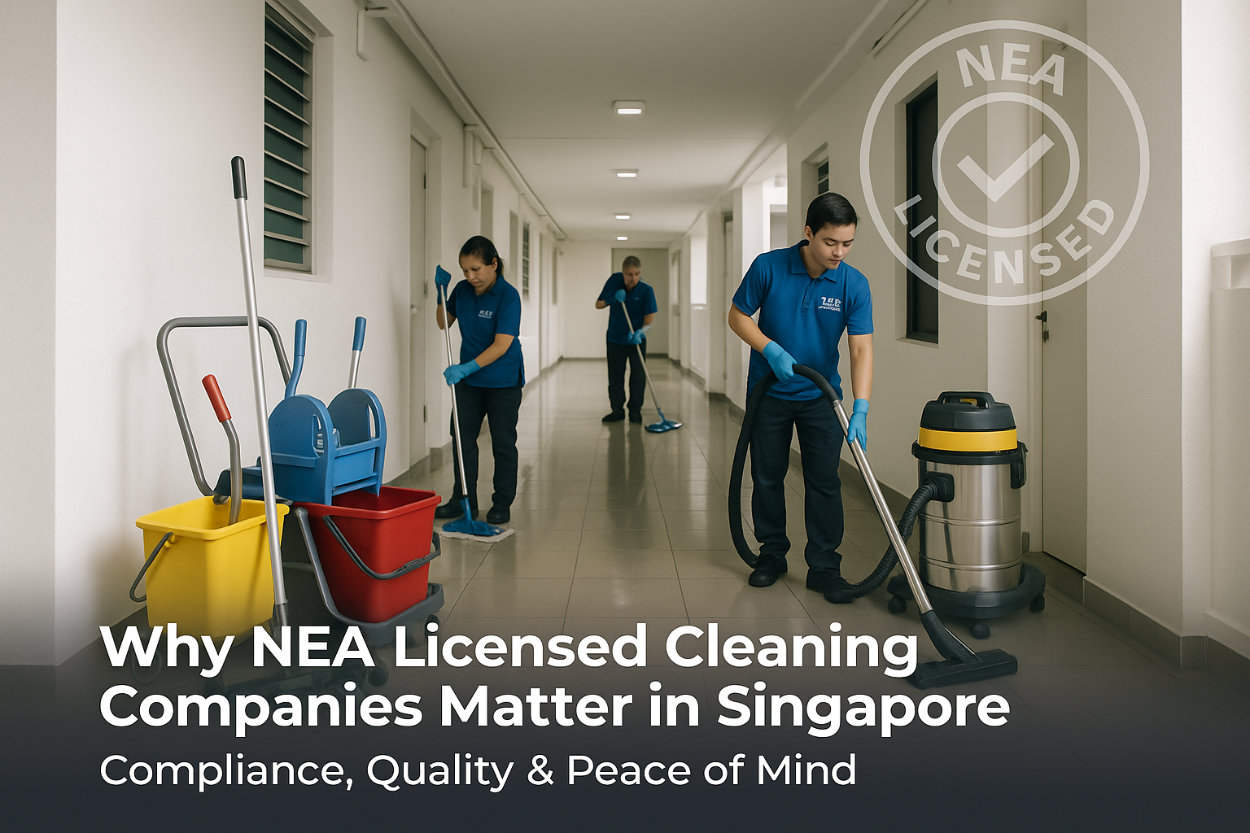
In Singapore, you do not clean only to make things look neat. You clean to meet NEA standards and avoid surprise inspection trouble. One dirty bin centre or toilet can trigger complaints, and that quickly becomes a problem for businesses and MCSTs.

Working with an NEA licensed cleaning company means your cleaners follow clear rules instead of guessing what is good enough. Their license can be suspended if they ignore standards, so there is real accountability. In this guide, you will see what NEA licensing involves, how it affects training, chemicals and worker welfare, and how to check a provider before signing a contract.
If you are comparing vendors now, you can also browse the full range of professional cleaning services in Singapore offered by EasyCleanSG while you read.
What NEA Licensing Involves And Why It Matters
The Rigorous Standards Behind NEA Licensing
NEA does not approve cleaning businesses casually. Companies must meet set requirements before they can operate as licensed cleaning businesses under the Environmental Public Health Act and the cleaning business licence framework.
Typical expectations include:
- Proper business registration and key personnel details
- Documented cleaning workflows and site supervision
- Training plans for staff on hygiene and safe work practices
- Compliance with waste disposal rules and cleaning frequencies
- Adequate insurance and workplace safety provisions
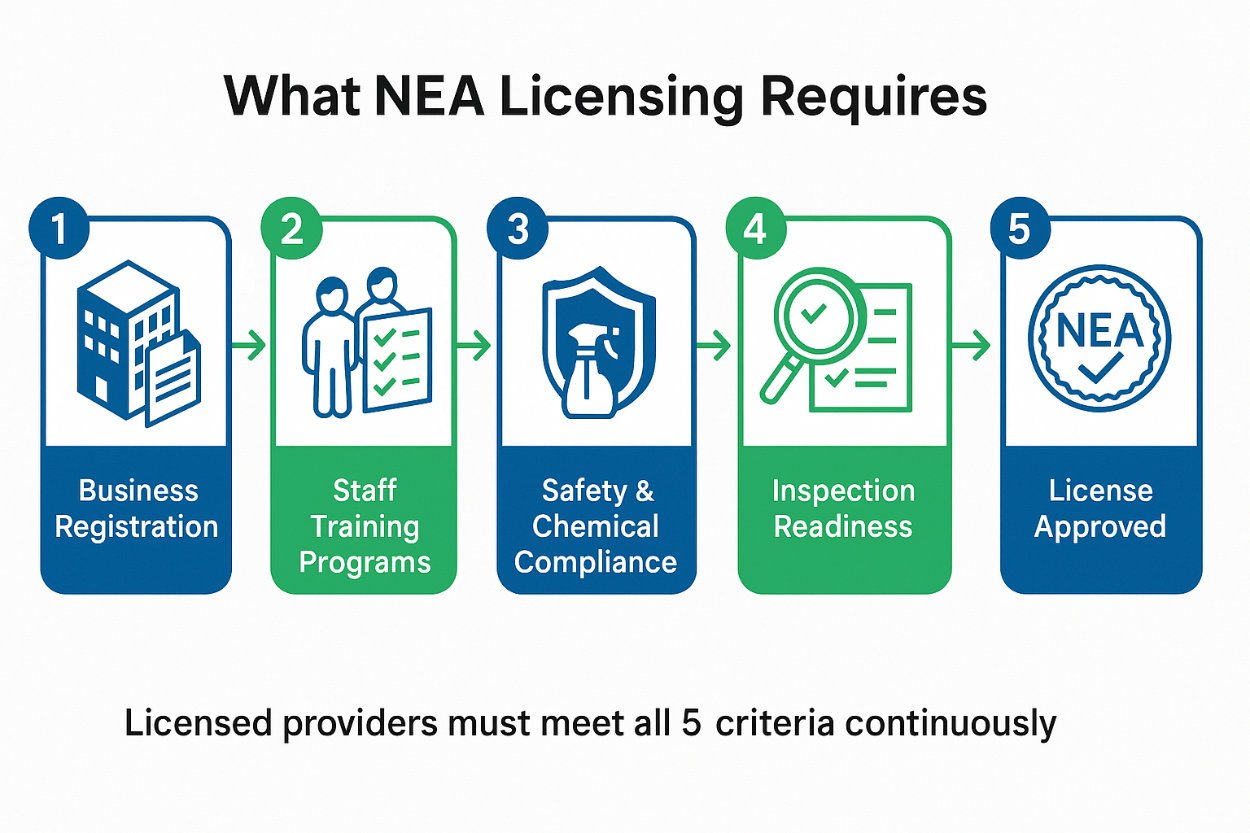
These are ongoing obligations. NEA can inspect sites, review complaints and request records. Licence holders that ignore conditions can face penalties or suspension.
Because of this, an NEA licensed cleaning company usually has:
- Standard operating procedures
- Checklists for each area
- Clear scope of work for every contract
You can learn more about licensing rules on the NEA cleaning business licence page.
Why NEA Licensing Matters For Clients
From the client side, the licence gives you extra assurance. You are not only trusting the company. You also know NEA can step in if serious issues appear.
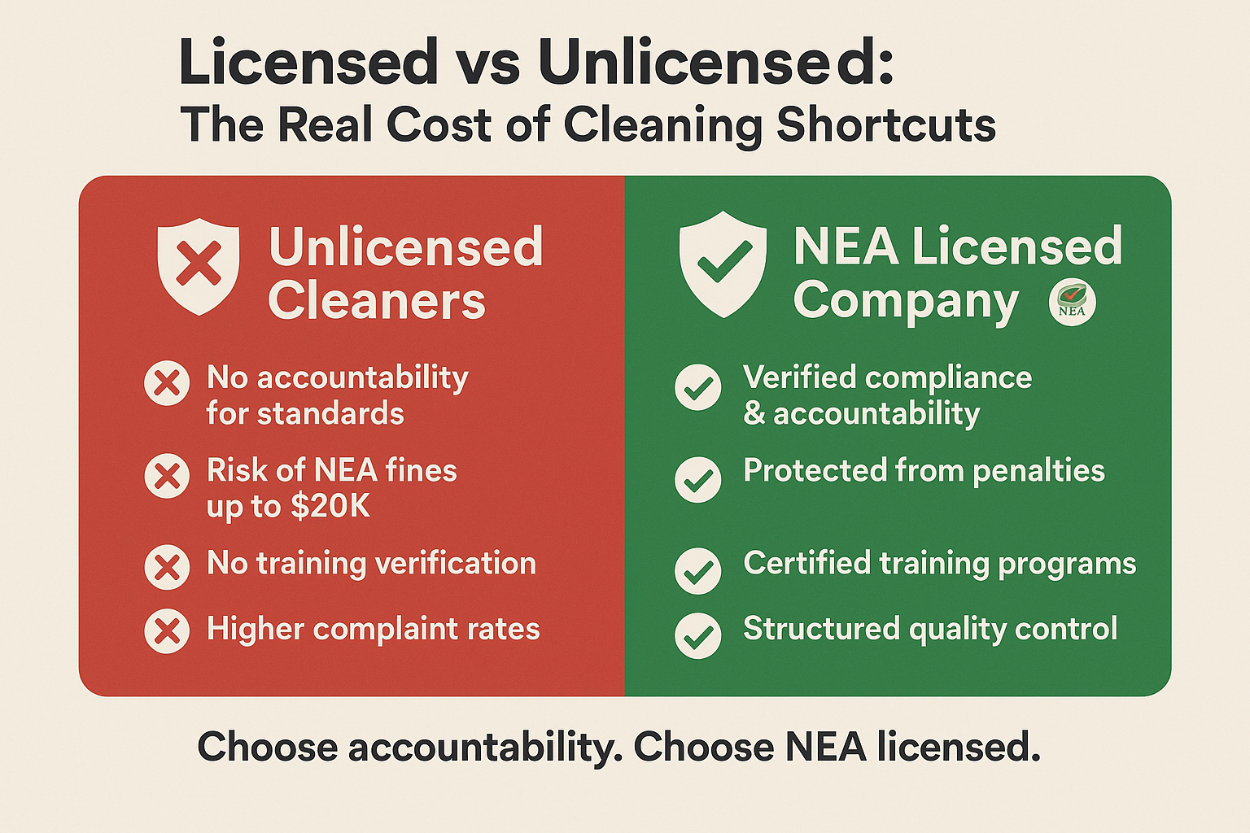
Choosing an NEA licensed cleaning company means you:
- Work with a provider that has passed a basic competency and safety check
- Reduce the risk of poor practices in toilets, bin centres and kitchens
- Have a clearer case if you need to escalate repeated hygiene problems
This matters a lot for:
- MCSTs managing common areas and rubbish points
- F&B outlets that already deal with strict food hygiene rules
- Offices, gyms and childcare centres where many people share facilities
An unlicensed freelance team may charge slightly less but might not understand NEA expectations for bin washing, grease control or disinfection. One bad inspection or viral complaint can wipe out any short term savings.
If you want to see how a licensed company presents its promise, take a look at the EasyCleanSG story on the About Us page.
The Impact Of NEA Licensing On Training, Chemicals And Worker Welfare
Comprehensive Training Programs For Staff
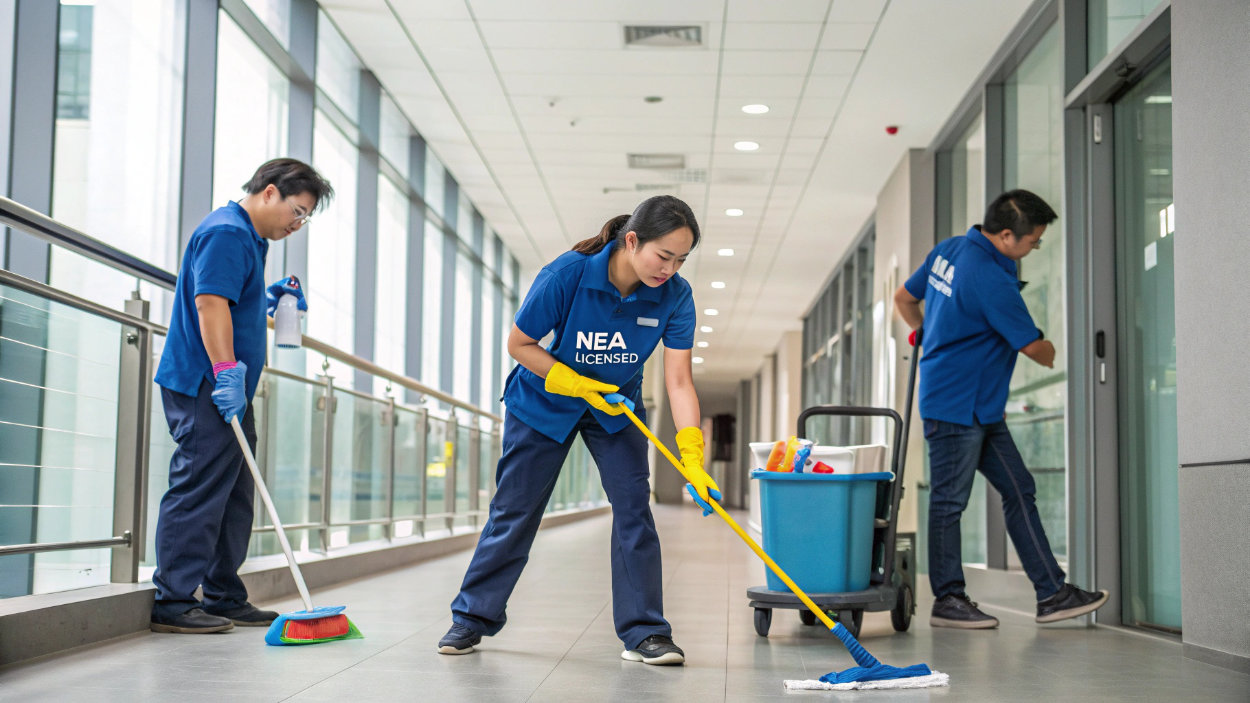
A key part of NEA licensing is staff competency. Licensed companies must show that cleaners know what they are doing and that supervision is in place.
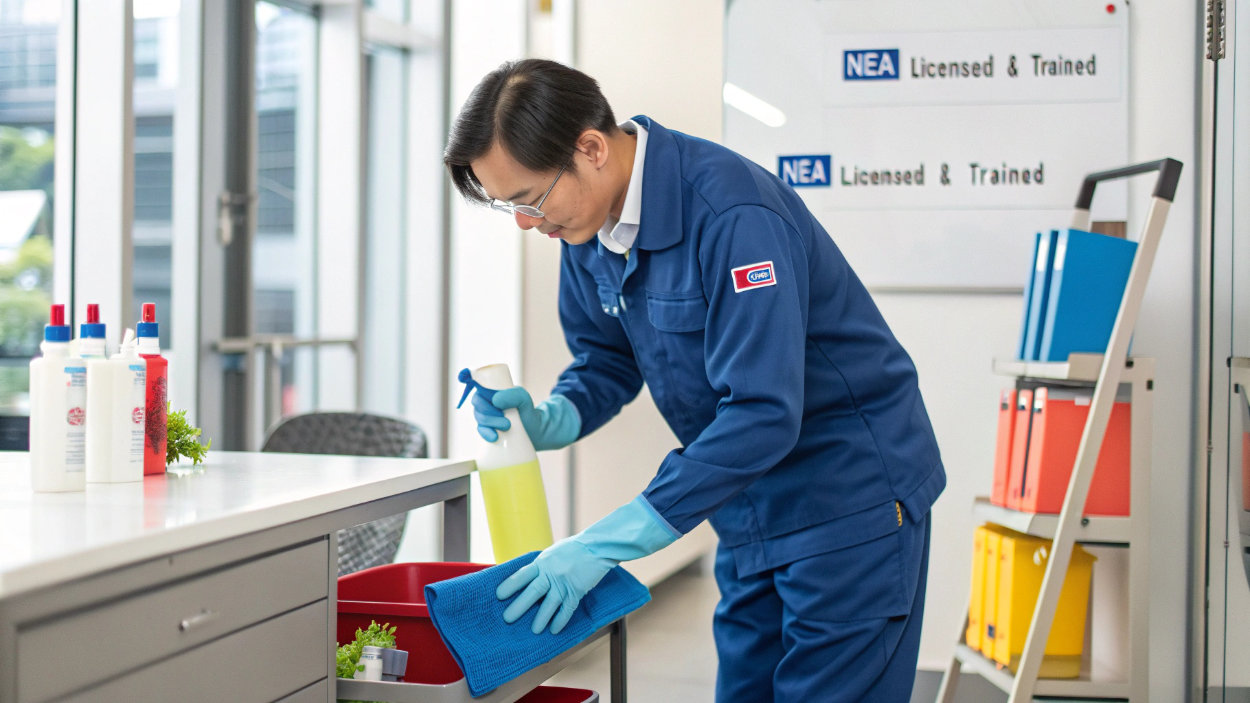
A company like EasyCleanSG typically trains cleaners to:
- Follow a clear sequence for each area, such as high touch points first, then general surfaces, then floors
- Use colour coded tools to avoid cross contamination between toilets, kitchens and offices
- Record tasks in checklists or digital logs so work is traceable
From what EasyCleanSG shares about its operations and growth, training and upskilling are central to their service promise.
When you are evaluating proposals, ask each vendor:
- How do you train new cleaners before they come on site
- How often do you refresh their training
- How many supervisor visits per month will my site receive
A licensed provider should be able to answer with specific examples, not vague reassurances.
For office managers who want more context, you can link from here to EasyCleanSG's blog article on keeping a clean and happy workplace to show how proper routines affect staff morale.
Use Of Approved, Eco Friendly Cleaning Chemicals
NEA licensing also influences what goes into the spray bottles. Licensed companies are expected to use suitable chemicals, follow dilution guidelines and handle them safely.
That usually means:
- Disinfectants selected with reference to health guidelines during outbreaks
- Products strong enough to deal with stains and germs but not unnecessarily harsh
- Proper labels and safe storage away from food and public areas
Many modern cleaning agents are:
- Low in strong fumes
- Effective on grease, scale or soap scum
- Designed to break down more easily in the environment
To understand the difference between simple cleaning and proper disinfection, you can refer readers to EasyCleanSG's own disinfection service guide, which explains cleaning versus disinfecting in clear terms.
When you speak with a potential vendor, ask them:
- What chemicals do you use for toilets, pantries and offices
- Do you have options for sensitive environments like childcare centres
- How do you store and label chemicals on site
The way they answer tells you a lot about their habits behind the scenes.
Prioritising Worker Welfare
Worker welfare might sound like an internal issue, but you see the impact in your corridors and toilets. Tired, poorly equipped cleaners make mistakes and skip steps.
Responsible, licensed companies usually provide:
- Protective gear such as gloves, masks and safety shoes
- Clear instruction on ladder safety, machine handling and chemical contact
- Reasonable shift lengths and realistic scope so the team can complete tasks properly
Sometimes clients push for a very low quote and expect a long task list on top. That usually leads to under staffed sites. Cleaners cannot keep up, complaints rise and turnover increases.
When you compare prices, request clarity on:
- Number of cleaners per shift
- Daily hours on site
- Whether you have a dedicated account supervisor
If you know your home also needs one time help, you can share that readers can book residential cleaning services with EasyCleanSG for spring cleaning, move in or move out support, rather than overloading a regular contract.
How Businesses And MCSTs Can Verify A Provider's NEA License
Steps To Verify NEA Licensing
Checking a cleaning company's NEA licence status is quick and should be part of your vendor selection process.
Here is a simple method:
- Visit the NEA website
- Go to the cleaning business licensing section
- Use the search function to look up the company name or UEN
- Confirm the licence status is active, and note the validity dates
If a company cannot provide its licence number, or tries to change the topic when you ask, that is a clear warning sign.
Inside your own article, you can create a helpful jump link so readers can return to this section easily. For example, earlier in the post you can write:
Not sure how to check a company's credentials See our guide on How Businesses And MCSTs Can Verify A Provider's NEA License.
Why Verification Protects Your Reputation
Verifying a provider's NEA licence protects you in several ways.
By confirming licence status, you:
- Reduce the chance of hiring informal teams with no accountability
- Show that management has done basic checks during vendor selection
- Lower the risk of major hygiene issues during inspections
Imagine an MCST in Tampines that hires an unlicensed team to manage corridors and bin centres. Washing is skipped when staff are short, smell builds up and residents complain. When an inspection comes, the council has no strong partner to lean on.
Now compare with an MCST that engages an NEA licensed provider like EasyCleanSG, with a clear schedule for corridor sweeping, lift lobby mopping and bin centre washing. Problems can still happen, but management can work with the contractor to add manpower or adjust scope instead of starting over.
For readers who want a deeper guide on choosing vendors, you can later create and link to an article from your blog hub at EasyCleanSG's cleaning tips and stories.
When You Should Insist On An NEA Licensed Cleaning Company
High Risk And High Traffic Environments
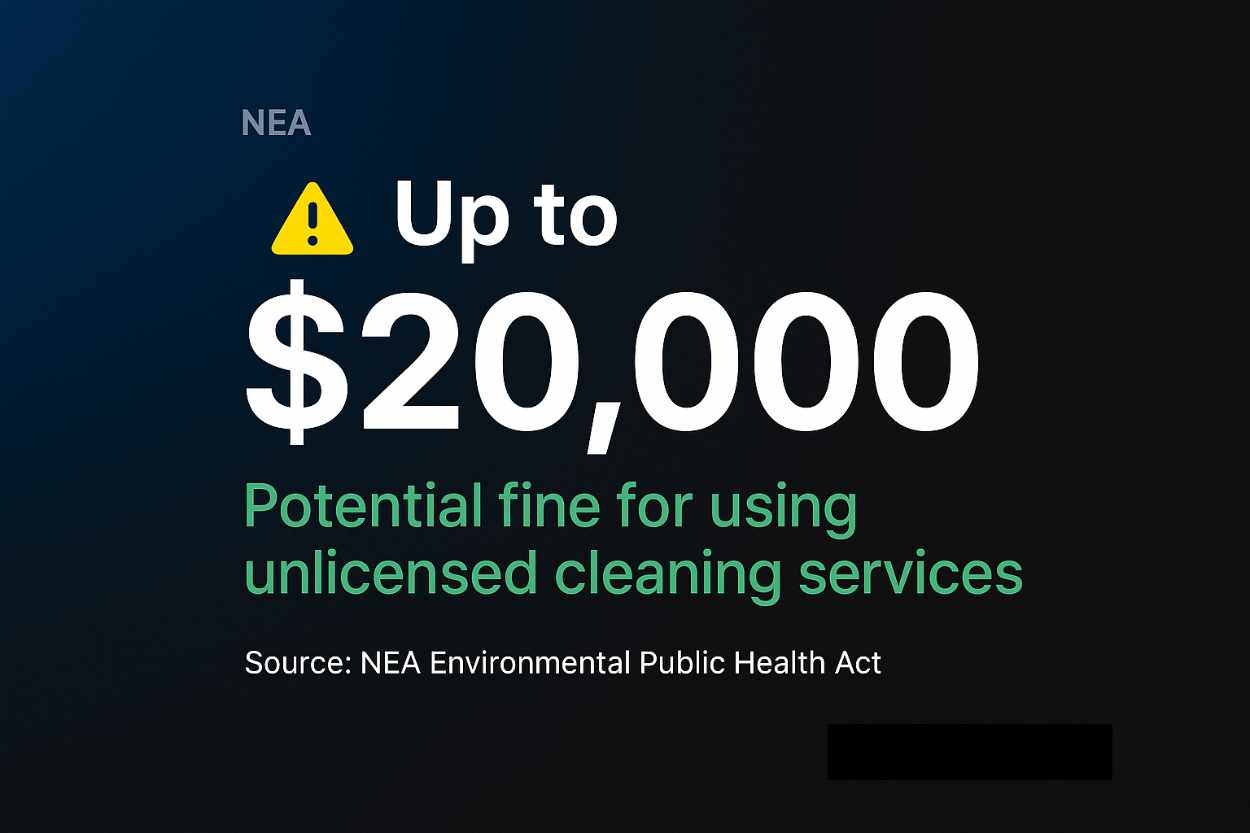
Certain spaces should always use NEA licensed cleaning companies. For example:
- F&B outlets that need strict grease and pest control
- Childcare centres and tuition centres
- Gyms, yoga studios and shared shower areas
- Clinics and eldercare facilities
These places have high touch points and sometimes vulnerable users. One bad hygiene incident can spread quickly on social media and hurt your brand.
For corporate offices and industrial sites, NEA licensing still matters because:
- Shared toilets and pantries see heavy daily use
- Lifts and lobbies set the first impression for visitors
- Complaints from tenants can escalate to management and regulators
If you manage a site where many people pass through daily, the key question should be:
Which NEA licensed cleaning company fits our site and budget best
rather than Can I cut costs with an unlicensed team
What To Ask Before You Sign A Contract
Use this short checklist when you meet potential vendors.
- Are you currently NEA licensed
- What is your licence number and expiry date
- How many cleaners will you assign to my site for each shift
- What exactly is covered for toilets, pantries, lifts and bin centres
- Do you provide all tools and chemicals
- How do you handle feedback and urgent issues
A strong provider will answer clearly and may even show photos of their equipment or past projects.
You can turn this list into a simple one page comparison sheet and offer it as a free resource at the end of your article. When you do that, invite readers to get direct help from EasyCleanSG through the contact form if they want advice on scopes and pricing.
Conclusion And Call To Action
Choosing an NEA licensed cleaning company in Singapore affects real, everyday details. It shapes how toilets are disinfected, how bin centres are washed, what chemicals touch your floors and how confident you feel when NEA or residents raise concerns.
Licensed providers work under clear rules. They invest in training, use suitable chemicals, take care of their cleaners and follow structured schedules so your site does not rely on guesswork. When you combine that with sensible questions about manpower and scope, you get cleaner spaces, fewer complaints and less risk.
If you are ready to upgrade your cleaning support, reach out to EasyCleanSG for a proper cleaning plan that fits your site.
Share your floor plan, your current pain points and any issues you faced in past inspections. The team will recommend a practical cleaning approach and you can get in touch quickly by using the Contact Us page or WhatsApp.
Inspections can be sudden. Your cleaning standards should feel steady and boring, in the best way possible.