

Most people assume their aircon needs only light maintenance. In reality, Singapore's humidity and compact HDB layouts create conditions that strain a home aircon far faster than the manufacturer's general recommendations. Filter dust, wet coils, and a warm motor form a good base for mold and bacteria if the unit sits uncleaned for too long.
Many households try to stretch to four or six months between servicing. The usual reason is cost. The catch is simple. A unit running below efficiency consumes more electricity. The bill rises quietly. The moment the coil becomes coated with grime, the system must work harder to reach the same temperature. A small deposit saved on delayed servicing often becomes a higher SP bill.

A well-maintained aircon keeps your family comfortable and healthy in Singapore's tropical climate
What is the Optimal Aircon Servicing Frequency for a Singapore HDB Flat?
Answer Capsule Singapore's humidity requires a usage-based schedule. High-use rooms such as the Master Bedroom, Home Office, and daily-use Living Room should follow a 3-monthly general service to avoid a 15 to 25 percent rise in electricity costs. Low-use Guest Rooms can stretch to 4 to 6 months. If cooling becomes slower or the smell changes, clean the unit immediately.
Why a 3-Month Cycle Works for Most Homes
Our teams service units across many estates including Jurong, Bukit Batok, Punggol, Sengkang, Pasir Ris and several BTO clusters. When we track the jobs from returning customers, we see a consistent pattern. Most indoor units show early signs of reduced airflow at week ten or eleven. The coil holds moisture. Dust becomes sticky. Airflow drops. Once the coil loses efficiency, the compressor compensates by running longer. This is where the extra power draw happens.
Over time, stretching to six months becomes the point when water leaks and odour issues form. The humid environment speeds up these changes.
What We Measured Across Common HDB Setups
A standard 9000 BTU indoor unit running daily tends to hold its performance quite well up to the tenth week. After that, the dust layer on the coil is thick enough to reduce heat exchange. Based on wattage measurements taken before and after servicing, the power draw can increase between 15 and 25 percent when cleaning is delayed to six months. A unit drawing extra power at every cycle adds up quickly on the bill.
Below is a simple breakdown that matches real use cases we encounter.
| Usage Area | Recommended Frequency | Key Issue if Delayed | Cost or Risk |
|---|---|---|---|
| Home Office (Daily Use) | Every 3 Months | Biofilm, frozen coils | Higher SP bill, allergy flare-ups |
| Master Bedroom (Nightly) | Every 3 Months | Musty smell | Drain pipe blockage |
| Living Room | Every 4 Months | Dust load | Slow cooling |
| Guest Room | Every 6 Months | Late leak detection | Higher repair cost |
Useful internal links:
- General cleaning details: https://www.easycleansg.com/services/aircon-general-cleaning
- Chemical wash details: https://www.easycleansg.com/services/aircon-chemical-wash
- Repair services: https://www.easycleansg.com/services/aircon-repair
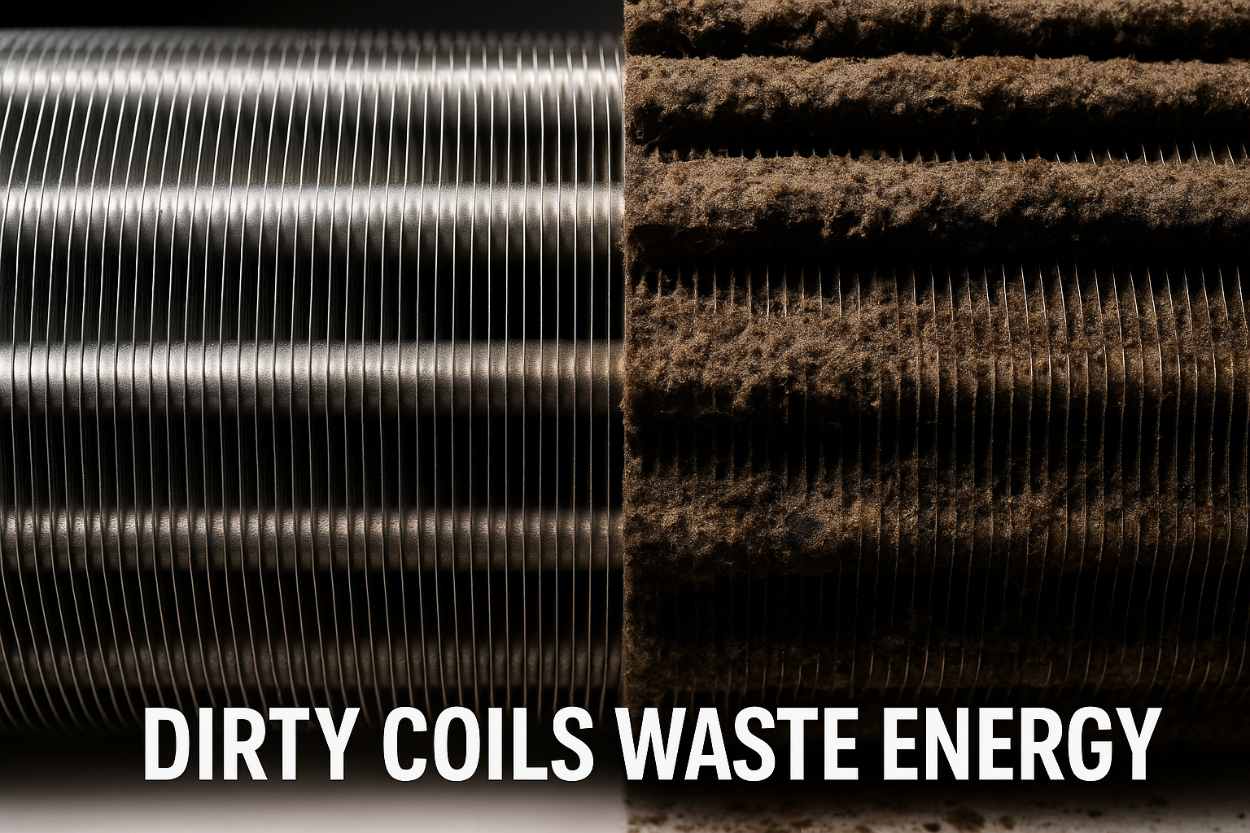
Side-by-side comparison of clean and dust-covered AC coils showing airflow restriction and energy waste
The Home Office Room Needs a Stricter Schedule
Remote work changed how flats use aircon. A home office unit often runs eight to ten hours daily. This is longer than a bedroom which usually operates only at night. Continuous cooling traps moisture in the drain pan and blower area. This creates a warm and wet zone inside the unit.
Indoor air quality becomes a concern in closed study rooms. The NEA shares reminders on indoor air freshness and ventilation for small spaces. Reference: https://www.nea.gov.sg/our-services/pollution-control/indoor-air-quality
When someone sits in this room all day, a dirty blower releases more particles into the air. Allergy symptoms become more common. We often see fine black dust and mould spots after long running hours. A fixed 3-monthly routine keeps the room comfortable and stable. It also protects the blower wheel from early wear.
Why Humidity Makes Servicing More Important
Singapore's humidity does not give the coil much time to dry out. Even when the aircon is switched off, water remains inside the fins. Dust meets moisture. This forms a sticky layer that builds faster than in cooler climates. Many homeowners assume the wire mesh filter is the main concern. The deeper problem is the evaporator coil behind that filter. If the coil stays damp, mould begins to take hold below the visible surface.
A common sign is a faint smell when the aircon first starts. This is the early stage. Once the smell becomes strong, a regular cleaning will not solve it. This is the point where the unit usually needs a Chemical Wash.
- Internal link: https://www.easycleansg.com/services/aircon-chemical-wash
The Warning Signs You Should Not Ignore
1. Water Leaking from the Indoor Unit
Leakage is one of the most common problems in both older and newer flats. In older flats, dust buildup in the drain line is the main reason. For newer BTOs, especially those under five years old, we often find leftover construction material inside the pipe. Plaster residue or fine sand narrows the drain line. The water that should exit the pipe ends up dripping into the room.
A drain line flush solves this in most cases. It usually takes one to two hours. The usual cost range is 80 to 120 dollars per unit.
2. Smell Coming from the Indoor Unit
A light musty smell often means early mould formation. A regular servicing may help. A strong, stale smell means the coil surface or blower is coated with microbial growth. The unit requires a deeper treatment. If your nose catches the smell as soon as the aircon starts, the system likely needs more than a surface clean.
3. Unusual Noise
Grinding or rattling often comes from loose screws or a worn bearing. If the blower wheel loses balance, the vibration stresses the motor. This can lead to a larger failure. Fixing a noisy part early keeps the cost low.
When a Chemical Wash or Overhaul Becomes Necessary
A Chemical Wash removes hardened dirt and biofilm that normal cleaning cannot reach. We recommend it when:
- Smell returns soon after normal servicing.
- Cooling drops even though the filters are clean.
- Water freezes on the coil.
For most homes, a reset interval of 18 to 36 months works well. Smaller service jobs keep the system running. A Chemical Wash restores deeper parts of the unit.
For very old units or systems with repeated issues, a full overhaul may offer better value. This is usually needed when several internal parts are clogged or when the unit has served more than eight to ten years.
- Internal link: https://www.easycleansg.com/services/aircon-overhaul

Technician showing dark, contaminated water being flushed out during aircon chemical cleaning service
Practical Way to Plan a Servicing Schedule
A simple method that works for many families is this:
- Count the rooms used daily or nightly.
- Group these under the 3-monthly cycle.
- Place less used rooms under the 4 to 6-monthly cycle.
- If any unit shows slow cooling or odour changes, move it immediately to a service now category.
Families with young children or allergy concerns often prefer a firm 3-monthly schedule across all rooms. Home offices should never stretch beyond this.
Why Early Servicing Protects Your Wallet
The cost of ignoring early signs is higher than the cost of regular service. Repair jobs often start with coil freeze, clogged drain lines, or worn motors. These issues typically appear only after months of dirt buildup. A simple call every few months avoids all of these. You also benefit from stable cooling and a cleaner indoor environment.
With correct servicing, a well-installed unit can serve ten years or more. Poor maintenance shortens the life span and increases the chance of sudden failure in the hotter months.

If You Want a Fixed, No-Guesswork Servicing Schedule
If you prefer not to think about when to service your aircon and simply want it taken care of on time, we can help you plan a realistic schedule based on how your family actually uses each room.
Share three simple details:
- How many units you run on a normal week
- Which rooms run the longest, for example home office or master bedroom
- Any current issues like leaks, smells, slow cooling or noise
From there, EasyCleanSG can suggest a clear service cycle for each room and match it with the right service type—for example general cleaning, chemical wash or leak repair.
If you already know you are overdue, you can also skip the planning step and book a slot directly on our service pages:
- General servicing: https://www.easycleansg.com/services/aircon-general-cleaning
- Chemical wash: https://www.easycleansg.com/services/aircon-chemical-wash
- Leak and repair support: https://www.easycleansg.com/services/aircon-repair
This way your aircon stays efficient, your rooms stay comfortable, and you avoid surprise repair bills later.