

The fastest way to ruin a floor in Singapore is to clean every type the same way. The mop that keeps your tiles gleaming can etch marble, swell laminate, and strip the seal off parquet. This guide covers the main floor types in HDB flats and condos here, the correct method for each, the products that quietly cause damage, and how often to clean them so the finish lasts.
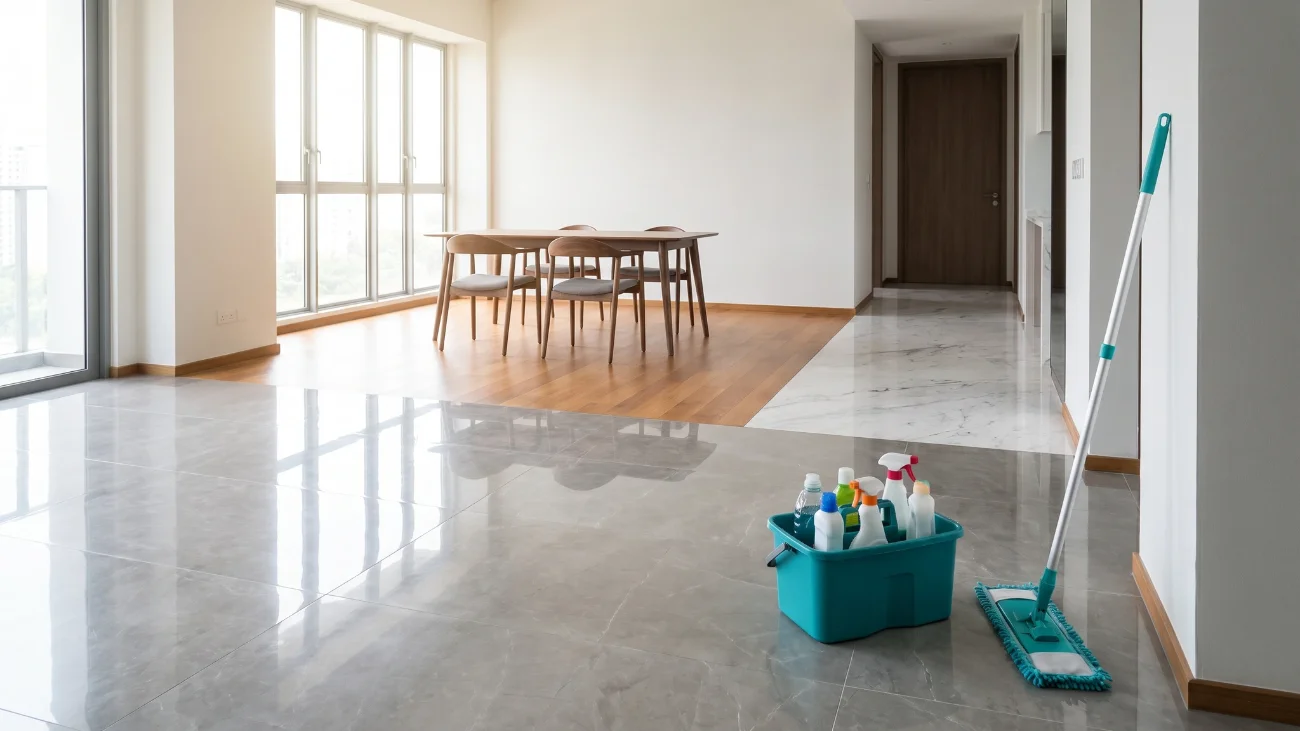
What Is the Right Way to Clean Each Floor Type?
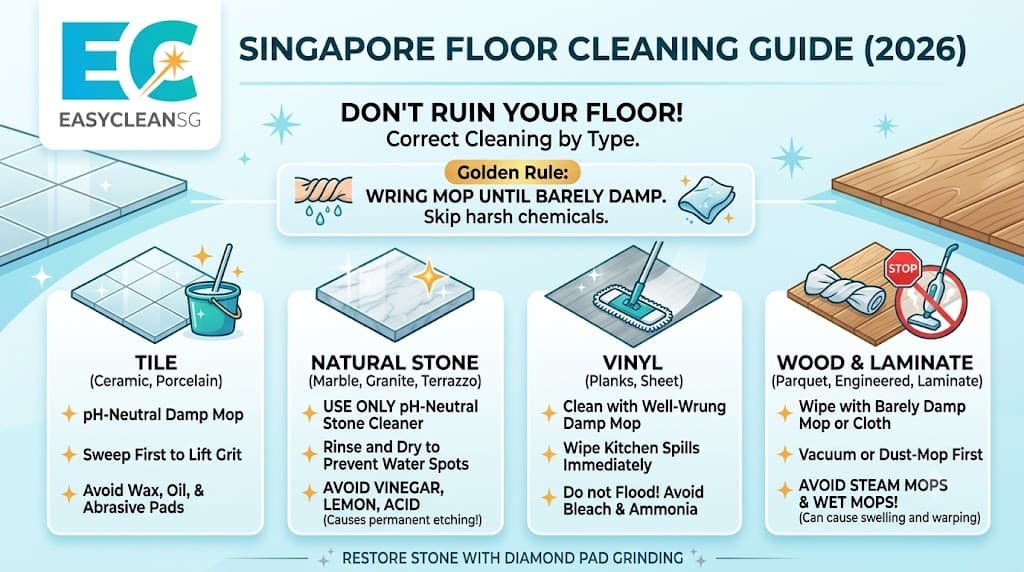
Quick Answer: Match the method to the material. For tile (homogeneous, porcelain, ceramic), damp-mop with a pH-neutral cleaner. For marble, granite and terrazzo, use only a pH-neutral stone cleaner and never anything acidic like vinegar or lemon, which permanently etches the surface. For vinyl, parquet, engineered wood and laminate, keep water to a minimum with a well-wrung mop and never use a steam mop, because trapped moisture makes these floors swell and warp. The one rule that protects almost every floor: wring the mop until it is barely damp, and skip harsh chemicals.
Singapore's humidity sits around 80 to 90 percent for most of the year. That single fact changes how floors behave. Moisture that would dry off quickly in a drier climate lingers here, and it is the main reason wood-based and vinyl floors fail early when they are cleaned with too much water. Get the method right for each surface and you avoid the two most expensive mistakes: etching stone and swelling wood.
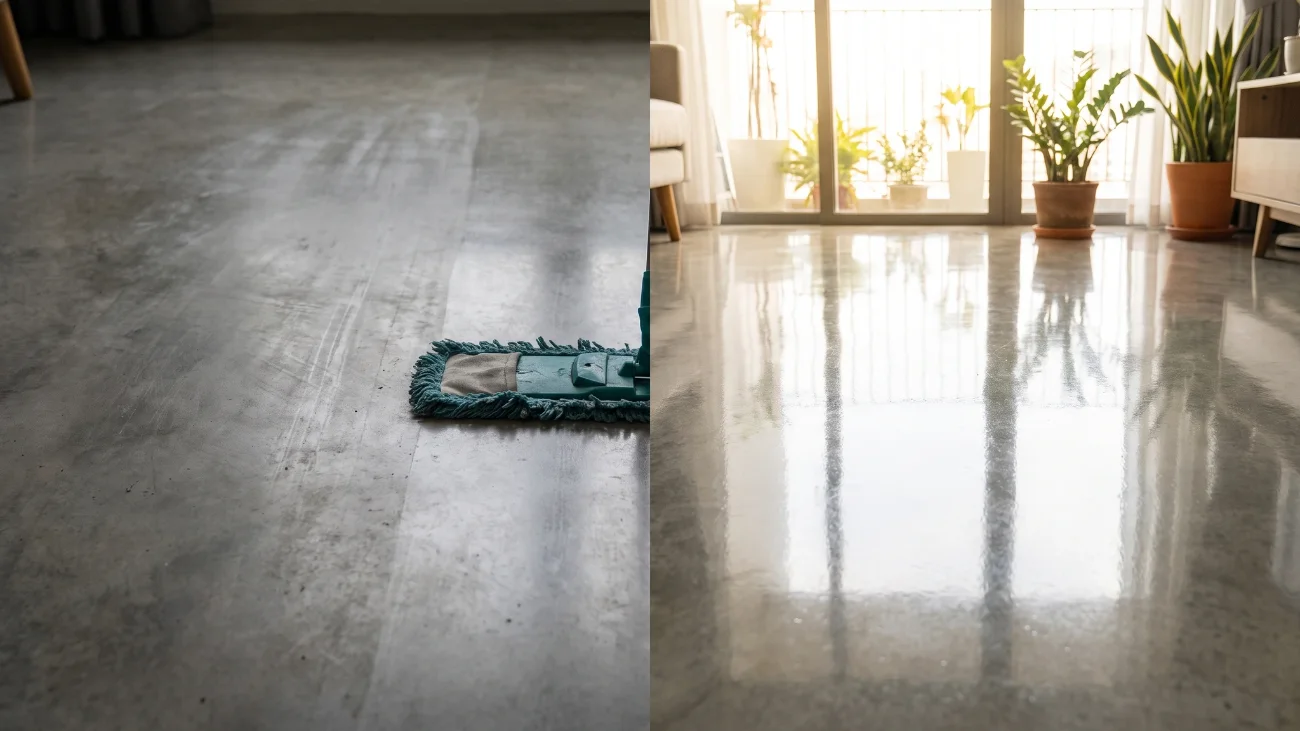
Tile: Homogeneous, Porcelain and Ceramic
Tile is the most common floor in Singapore homes, from HDB living rooms to condo kitchens. It is also the most forgiving, which is why so many people clean everything else the same way and run into trouble.
Right method: Sweep or vacuum first to lift grit, then damp-mop with a pH-neutral floor cleaner in warm water. Buff dry with a microfibre cloth if you want the gloss back on polished porcelain or homogeneous tile.
What to avoid: Skip wax and oil-based cleaners, which leave a film that dulls the tile and turns slippery over time. Steel wool and abrasive pads scratch the surface and can chip polished edges. Strong acid washes belong to post-renovation cement-haze removal done by a crew, not routine cleaning.
Frequency: Sweep high-traffic areas daily, damp-mop once or twice a week. A monthly buff keeps polished tile bright.
Marble, Granite and Terrazzo: Natural and Composite Stone
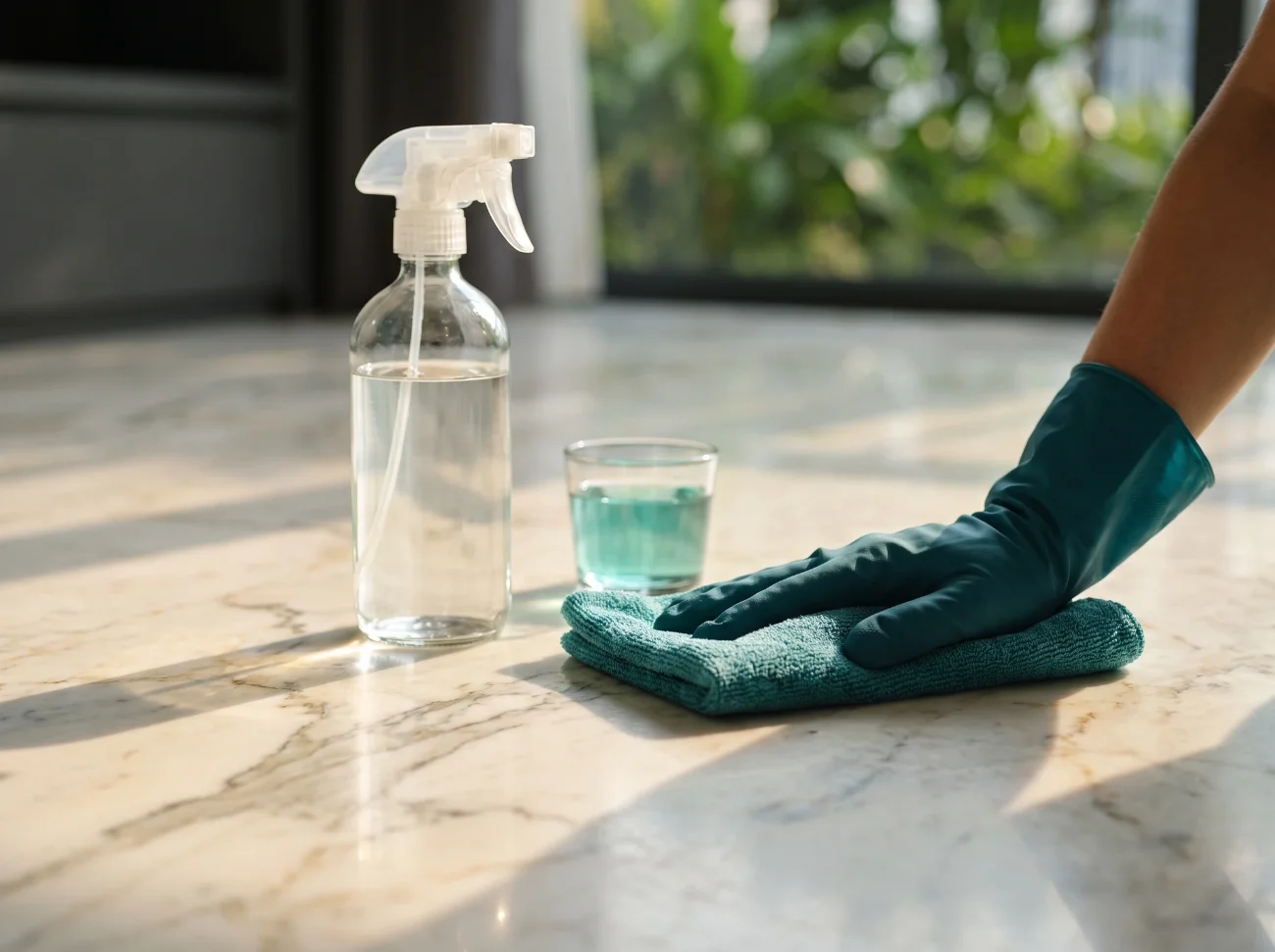
Marble and granite show up in many condos and landed homes, and terrazzo is common in older HDB flats and heritage units. These stones are beautiful and unforgiving. The wrong cleaner does damage you cannot mop away.
Right method: Dust-mop to clear grit, then clean with a pH-neutral stone cleaner diluted per the label. A few drops of mild dish soap in warm water works for an occasional wipe. Rinse with clean water and dry with a soft cloth to prevent water spots.
What to avoid: Never use anything acidic. Vinegar, lemon, citrus cleaners and general bathroom sprays sit around pH 2 to 3 and chemically etch marble and terrazzo, leaving dull marks that need professional grinding to fix. Terrazzo contains marble and limestone chips, so acid eats those chips the same way. Avoid abrasive pads and bleach for long-term care.
Frequency: Damp-mop weekly with the stone-safe cleaner. Blot spills straight away, especially coffee, wine and anything citrus, then flush with water. Sealed stone usually needs resealing every one to three years, sooner for light-coloured marble.
Vinyl: Planks and Sheet Flooring
Vinyl has become one of the most popular choices for BTO and resale renovations because it looks like wood and costs less. It handles daily life well, but it has one weakness that catches people out: standing water at the seams.
Right method: Sweep or vacuum, then clean with a well-wrung damp mop and a mild pH-neutral cleaner. Wipe sticky spots with a soft sponge.
What to avoid: Do not flood vinyl with water. A soaking mop lets moisture seep into the seams, where it can lift the adhesive and cause bubbling or warping. Skip abrasive scrubbers, bleach and ammonia, which wear down the protective top layer. Do not apply wax or wax-based polish. Modern vinyl is made to be low-maintenance, and wax only builds up into a sticky film that grabs dirt.
Frequency: Sweep as needed, damp-mop weekly. Wipe kitchen spills as they happen so nothing sits at the joints.
Parquet, Engineered Wood and Laminate: The Moisture-Sensitive Group
This group needs the most care in Singapore's climate. Parquet and engineered timber constantly expand and contract with humidity, opening tiny gaps. Laminate has a fibreboard core that swells if it gets wet and does not recover once it dries.
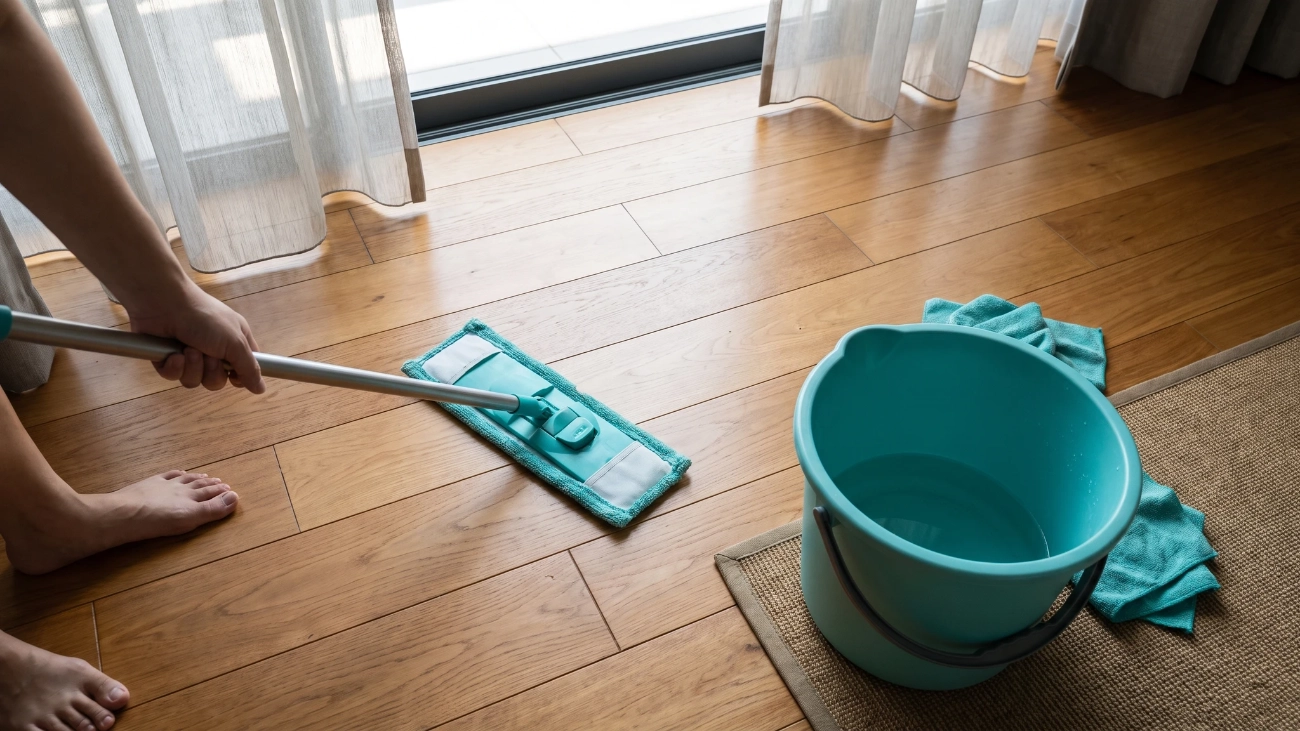
Right method: Vacuum or dust-mop to remove loose dirt first. Then wipe with a mop or microfibre cloth wrung out until it is barely damp, using a cleaner made for wood or laminate, or plain water. Any moisture left behind should dry within a few minutes.
What to avoid: Never use a steam mop on wood, engineered wood or laminate. The heat and moisture force water into the joints and between layers, which makes planks swell, cup or peel apart. Keep away from vinegar and other acids, which break down the polyurethane and wax seal over time, plus ammonia and oil soaps, which harm the finish. Most of all, avoid a wet mop. Standing water is the number one cause of warped wood floors here.
Frequency: Dust-mop or vacuum a couple of times a week, damp-wipe once a week with a nearly dry mop. Use as little detergent as possible so you do not dull the finish.
When to Clean It Yourself and When to Call a Professional
Routine cleaning of any floor type is a DIY job once you match the method to the material. The point where it pays to bring in a crew is when the floor needs restoring, not just cleaning.
Book a professional when marble or terrazzo has lost its shine or shows etch marks, since that needs diamond-pad grinding and a neutral crystalliser, not a mop. Post-renovation cement haze on tile also needs the right treatment and rinsing so you do not scratch the surface clearing it. A whole-home deep clean before a move or a festive reset is worth outsourcing too, because a trained team brings the correct cleaner for every floor in the house and will not use one bucket of the wrong solution across all of them.
For regular upkeep across HDB flats and condos, our residential cleaning service handles floors the right way by type. For stone restoration, cement-haze removal and other detailed work, see our specialised cleaning services. If your floors have not had a proper reset in months, a deep cleaning session covers them alongside the rest of the home. For a full picture of service types and pricing, read our guide to cleaning services in Singapore.
Frequently Asked Questions
Can I use the same cleaner on all my floors?
No. A pH-neutral cleaner is safe on tile, sealed stone, vinyl and most wood floors, so it is the closest thing to a universal option. But acidic cleaners that are fine for some bathroom jobs will etch marble and terrazzo, and any wet method that suits tile will damage wood and laminate. Match the water level and the chemical to the material.
Is vinegar safe for floor cleaning?
Vinegar is not safe for marble, granite, terrazzo or any wood-based floor. It is acidic enough to etch stone and to break down the seal on parquet and engineered wood over time. Use a pH-neutral cleaner instead. Save vinegar for surfaces that are confirmed acid-resistant.
Can I steam mop my floors in Singapore?
Avoid steam mopping wood, engineered wood, laminate and vinyl. The heat and moisture get forced into the joints and cause swelling, warping and delamination. Steam is only reasonable on sealed, water-tolerant tile, and even then a damp mop does the job with less risk.
How does Singapore's humidity affect floor cleaning?
High humidity keeps floors damp longer, so any water left after mopping lingers instead of drying off. That is why wood, laminate and vinyl need a nearly dry mop here, and why bathroom and kitchen floors need regular attention before mould and grime set in.
How often should I mop my floors?
For most homes, sweep or vacuum high-traffic areas daily and damp-mop once or twice a week. Moisture-sensitive floors like laminate and parquet prefer the lighter end of that, with a barely damp wipe once a week. Wipe spills as they happen regardless of floor type.
Clean by Type, Keep the Floor for Years
Every floor in your home wants a slightly different touch. Tile takes a proper mop, stone needs a neutral cleaner and no acid, and the wood and vinyl family want as little water as possible. Learn which floor you have and the right method follows, along with a finish that lasts.
EasyClean SG is rated 4.9 stars across more than 422 Google reviews, and our teams clean each floor type by its correct method, with the right products for stone, tile, vinyl and wood. Tell us your home layout and floor types, and we will handle the rest. See our residential cleaning options and book in minutes.
EasyClean SG | Residential & Specialist Cleaning | Singapore