

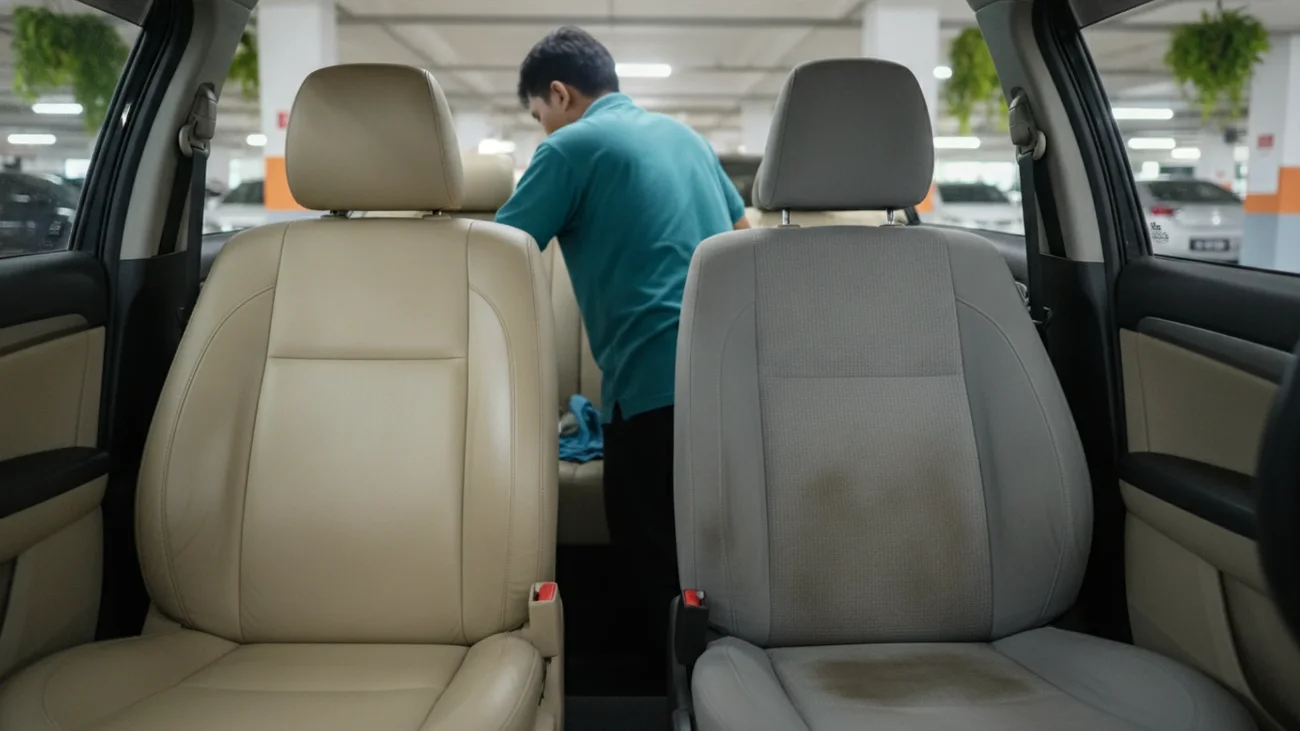
A spilled bubble tea or a wet raincoat left on the seat tells you fast whether leather or fabric was the better choice for your car. Leather and fabric car seats react very differently to Singapore's climate, and that difference shapes how often you clean them, what you pay for upkeep, and what your car is worth when you sell it. This guide walks through the real differences, based on the cars we clean around Singapore every week.
How Humidity Changes the Leather vs Fabric Question
Quick Answer: In Singapore's climate, leather car seats resist moisture better and carry lower mould risk, but need conditioning every 6 to 10 weeks. Fabric seats absorb moisture faster and are more prone to musty odours, though they cost less to repair. Over several years, fabric usually needs more frequent professional cleaning to stay hygienic.
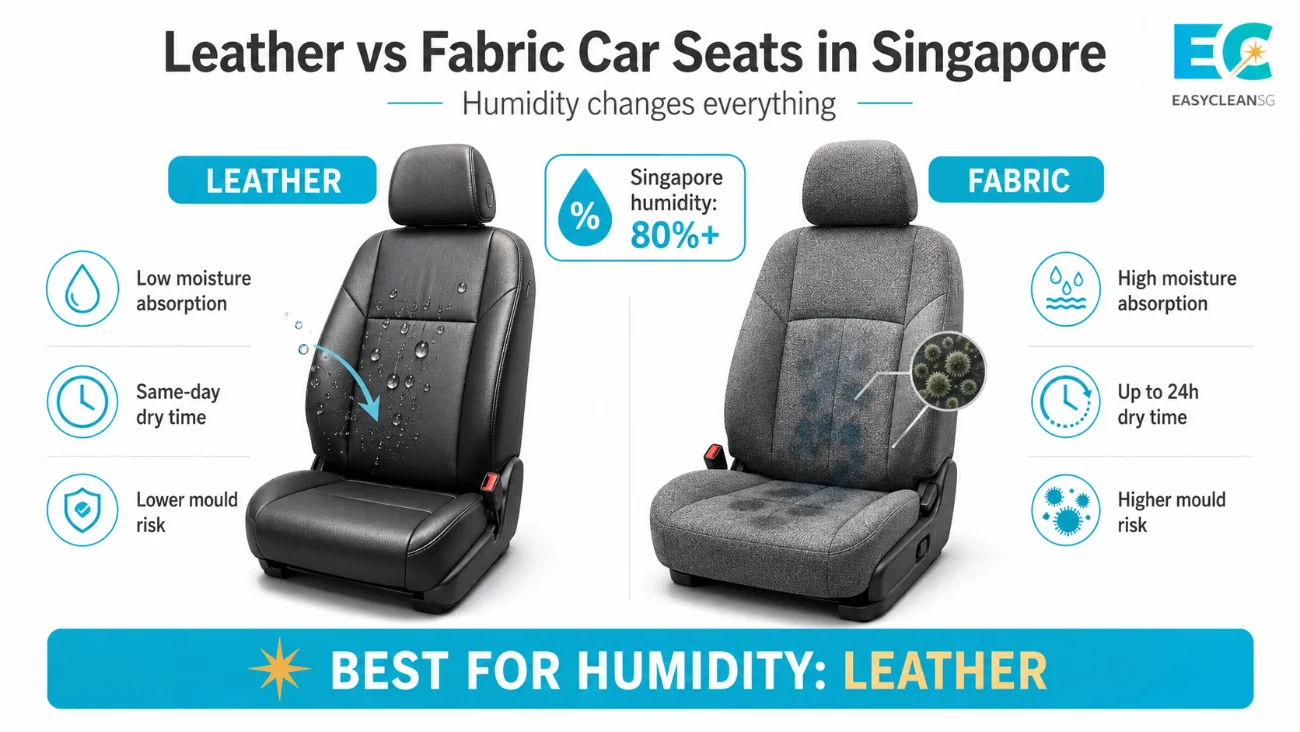
Singapore's relative humidity sits above 80 percent for most of the year. That single fact decides more about your car seats than the brand of cleaner you use.
Leather has a closed, non-porous surface. Spilled coffee, sweat, or a wet umbrella mostly sit on top long enough to wipe away before they soak in. Fabric works the opposite way. Its woven fibres pull moisture down into the foam padding underneath, where it stays trapped and warm.
We see the pattern often in HDB and condo carparks around Singapore. A fabric seat call-out almost always starts with the same story: a spill or a wet raincoat that never fully dried, followed by a musty smell two or three weeks later. Leather owners call us more for conditioning than for odour removal.
Neither material is immune to Singapore's climate. Leather that goes unconditioned for months will dry out and crack under repeated air-con and heat cycles. But moisture is the bigger day-to-day risk here, and fabric holds it longer.
Moisture absorption: low for leather, high for fabric. Dry time after cleaning: same day for leather, up to 24 hours for fabric.Mould risk: lower for leather, higher for fabric.
Cleaning Routines: What Each Material Actually Needs
Leather and fabric are not interchangeable when it comes to care, and using the wrong method on either one shortens its life.
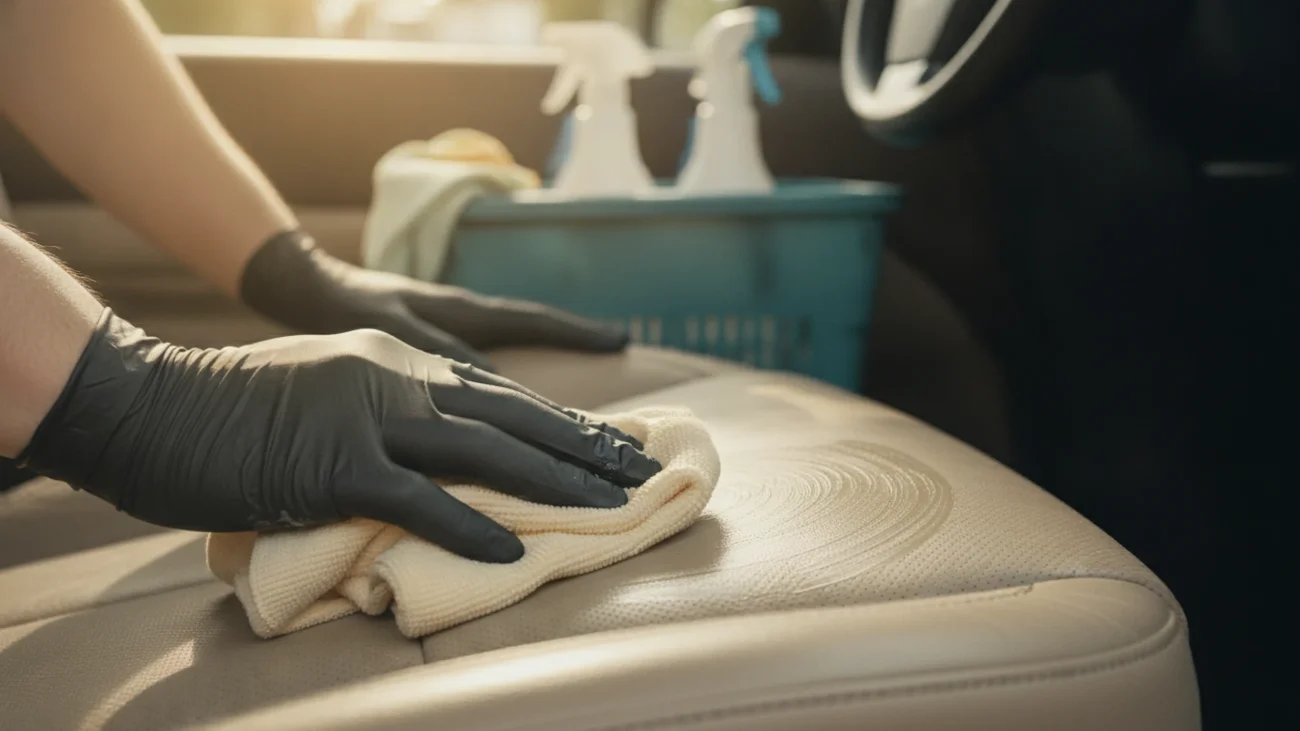
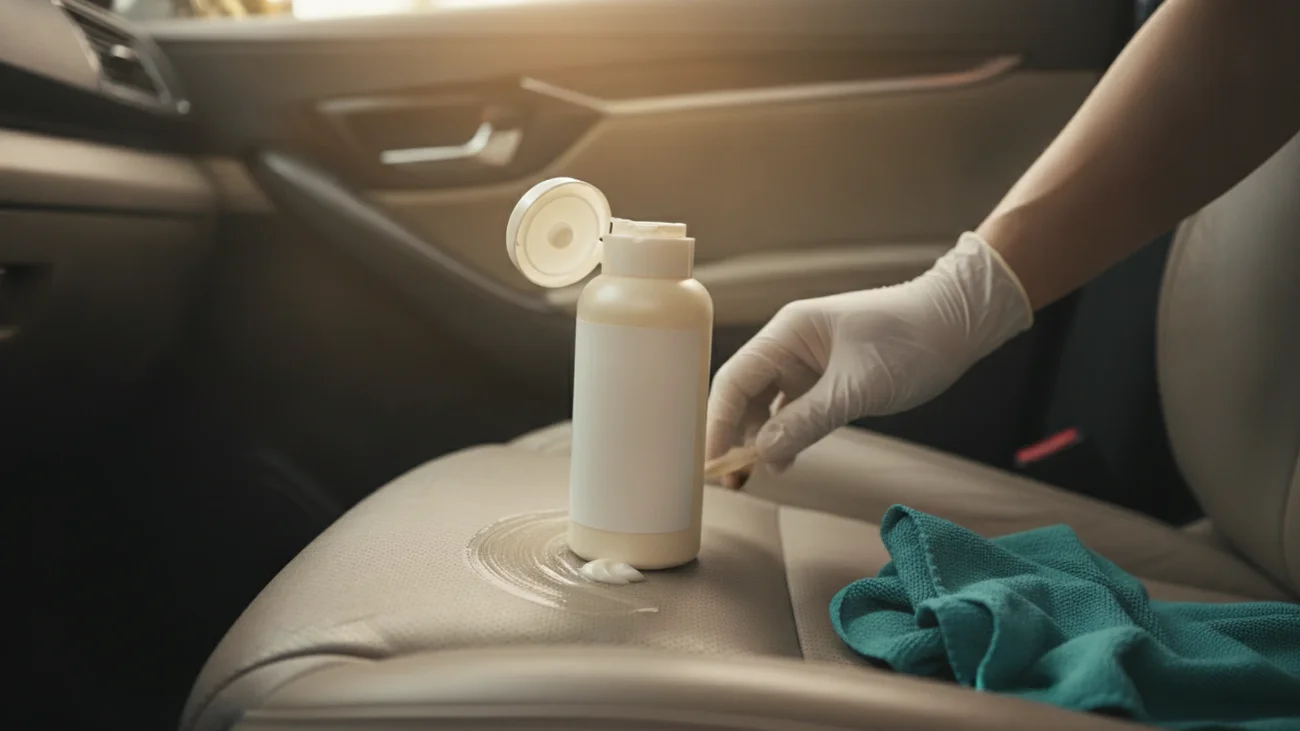
Leather needs a light wipe with a damp microfibre cloth after heavy use, plus a proper clean with a pH-neutral leather cleaner every few weeks. Skip household cleaners with ammonia or bleach, they strip the finish. Condition leather roughly every 6 to 10 weeks in Singapore's climate, more often than manufacturers recommend for drier countries, because the constant heat and humidity cycle dries out the hide faster.
Fabric needs regular vacuuming to lift grit before it grinds into the fibres like sandpaper. Spills should be blotted immediately, never rubbed, since rubbing pushes liquid deeper into the foam backing. A full shampoo and water extraction every few months lifts embedded dirt and bacteria that vacuuming alone cannot reach, but the seat needs a full day to dry properly afterward. Cracking a window or running the air-con on recirculation speeds that up and lowers mould risk while it dries.
Both materials benefit from keeping the car dry between cleans. A stray wet umbrella left on the floor mat does more damage over a week than most people realise.
Many newer cars in Singapore come with synthetic leather, sometimes called leatherette, instead of real hide. It cleans more like leather (wipe and condition) but tolerates moisture better and shrugs off the same daily wear that would eventually crack real leather. If your seats are synthetic rather than genuine leather, you can stretch the conditioning schedule out a little, though a wipe-down after spills still matters just as much.
Which Costs More to Maintain Long-Term
This is where the two materials really diverge, and the answer changes depending on whether you count cleaning or repairs.
Cleaning costs tend to run higher for fabric over time. A full fabric shampoo and extraction takes longer than a leather clean-and-condition session, because of the scrubbing, extraction, and drying involved. Fabric owners who want a genuinely fresh cabin usually book this deeper clean more often than leather owners book conditioning, especially in households with kids, pets, or a daily Grab-driving schedule.
Repair costs tend to run higher for leather. A cracked or torn leather seat needs re-dyeing or panel replacement, both skilled and priced accordingly. A stained or worn fabric panel is comparatively cheap to patch or re-cover.
Resale value tips toward leather when it is well maintained. Buyers in Singapore's used car market treat leather as a premium-trim signal, and a supple, crack-free leather interior supports a stronger asking price than a stained or musty fabric one. Neglected leather loses that edge fast, cracked seats read as poor upkeep, not luxury.
For the exact 2026 price ranges by vehicle size and cleaning tier, our car interior cleaning cost guide breaks down what a session actually costs for a hatchback through to an MPV.
Families with young kids or pets usually spend more regardless of seat material, since crumbs, pet hair, and small accidents push almost any car toward the deeper cleaning tier sooner. If that describes your household, fabric seats will likely need that deeper clean on a shorter cycle than the general guidance above, and leather owners should expect to wipe down more often between conditioning sessions.
When Mould Has Already Set In
If a musty smell shows up despite regular vacuuming, mould has probably already started in the foam underneath the fabric, not just on the surface. Surface wiping will not fix that.
Singapore's National Environment Agency has published guidance on how persistent high humidity and trapped moisture drive mould growth in enclosed spaces, and the same conditions apply inside a parked car with the windows up. Their advisory on improving ventilation and indoor air quality explains why identifying and removing trapped moisture at the source matters more than masking the smell.
At this stage, DIY sprays only cover the odour temporarily. Professional water extraction pulls the moisture and contamination out of the foam layer, and specialist add-ons like ozone treatment neutralise smell at the source rather than perfuming over it. Our specialised cleaning services cover this level of treatment for cars where a standard clean is not enough.
Catching the problem early, before the smell sets in, is always cheaper than fixing it after.
Frequently Asked Questions
Is leather or fabric better for Singapore's humid climate?
Leather generally handles Singapore's humidity better because its surface resists moisture absorption, lowering the risk of mould and lingering odour. Fabric is more prone to trapping moisture in humid conditions, though it costs less to repair when damaged.
How often should I clean leather car seats in Singapore?
Wipe leather seats with a damp microfibre cloth weekly to remove sweat and surface grime, and apply a proper leather conditioner every 6 to 10 weeks. Singapore's heat and humidity cycle dries out leather faster than in temperate climates, so this schedule runs tighter than most manufacturer guides suggest.
Can mould be removed from fabric car seats at home?
Light surface mould can sometimes be lifted with a fabric-safe cleaner and thorough drying, but mould that has reached the foam padding underneath usually needs professional water extraction. A musty smell that returns after cleaning is a sign the mould has gone deeper than a wipe can reach.
Does leather increase car resale value in Singapore?
Well-maintained leather interiors are generally viewed as a premium feature in Singapore's used car market and can support a stronger asking price. Cracked, dried out, or stained leather loses that advantage and can look worse than a clean fabric interior.
Do I need professional cleaning, or is a DIY routine enough?
Weekly wiping and vacuuming at home covers day-to-day upkeep for both materials. A deeper professional clean every few months reaches the padding and seams that home tools cannot, and is worth booking sooner if a spill, pet accident, or persistent smell shows up.
Is synthetic leather (leatherette) cleaned the same way as real leather?
Synthetic leather is wiped and cleaned the same way as real leather, but it tolerates Singapore's humidity better and holds up longer without conditioning. You can space out conditioning sessions on leatherette, though wiping down spills promptly still matters for both.
Book the Right Care for Your Seats
Leather and fabric need different routines, but both hold up better against Singapore's climate with regular attention instead of a once-a-year scramble.
If your leather is due for conditioning or your fabric seats need a proper deep clean, EasyClean SG is rated 4.9 stars across more than 400 Google reviews, with transparent per-service pricing and no hidden surcharges. Visit our car interior cleaning page to book the right service for your seat material and vehicle size.
Reviewed by EasycleanSG