

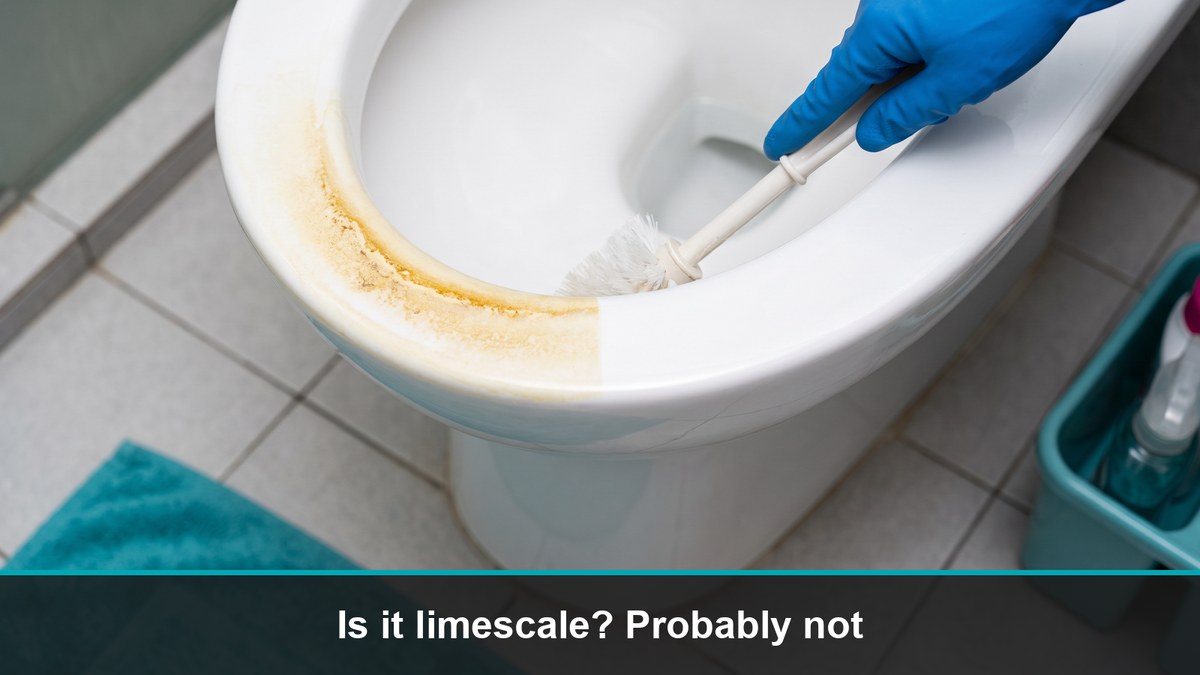
A yellow ring under the rim. An orange streak below the water line. A crust that a brush will not shift. Most Singapore homeowners call all of it limescale and reach for a stronger acid. That guess is often wrong, and it is why toilet deep cleaning at home so often disappoints.
Singapore tap water is soft, so true limescale is the smaller part of the story here. This guide shows how to tell what your stain really is, which cleaner suits each type, what a professional toilet deep clean covers in an HDB or condo, and when it is time to call someone.
Is that stain really limescale?
Quick Answer: Toilet deep cleaning removes what daily cleaning leaves behind: hard crust at the waterline, deposits under the rim, soap scum on the floor and grout, and film around the drain. In Singapore most of it is urine scale, biofilm or rust, not limescale, because tap water is soft. Identify the stain first, then pick the cleaner.
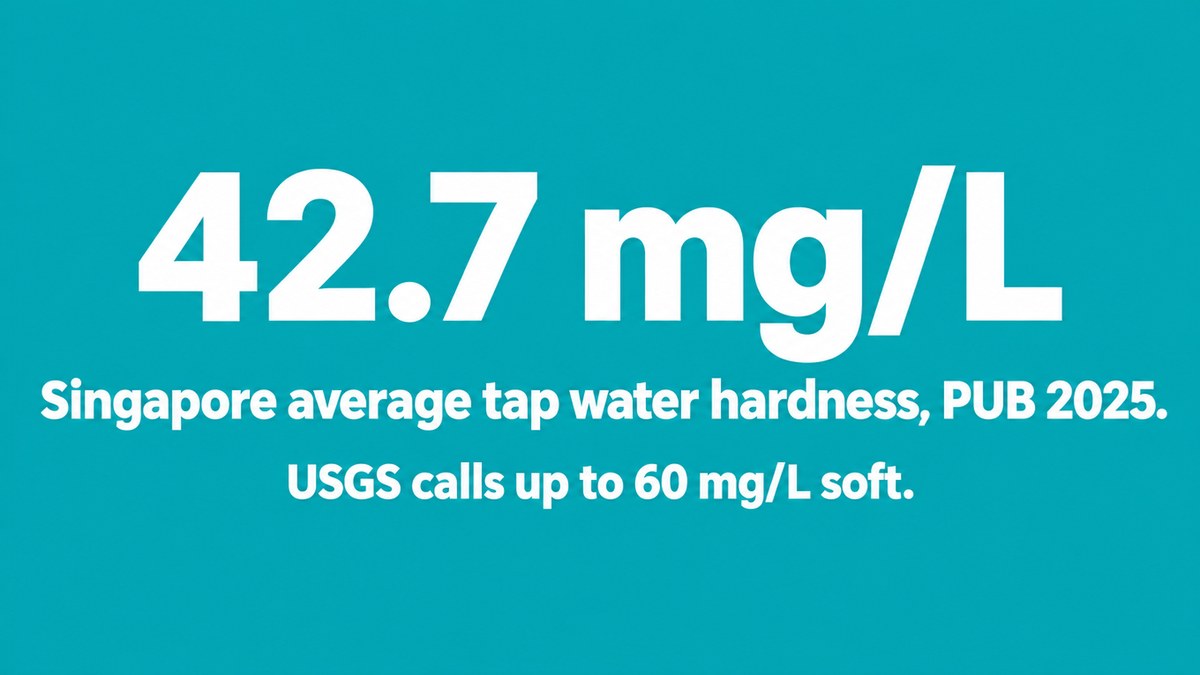
Limescale is mineral left behind when hard water evaporates. Singapore does not have much hard water. PUB's drinking water report for January to December 2025 lists average total hardness at 42.7 mg/L as calcium carbonate. The US Geological Survey calls anything up to 60 mg/L soft.
The same PUB table puts average iron in tap water at 0.009 mg/L. So the water coming out of the tap rarely stains a bowl orange by itself. Something else is going on.
That something is usually one of four things, and each one looks and feels different:
| What you see | Where | How it feels | Most likely cause |
|---|---|---|---|
| Yellow-brown crust, often with a smell | Waterline, front of the bowl, under the rim | Hard, rough, scrapes off in flakes | Urine scale: dried urine mixed with minerals |
| White or grey chalky film | Waterline, tap bases, flush plate | Hard but thin | Limescale, the real thing |
| Orange or red-brown streaks | Below the water inlet, around metal parts | Smooth, does not scrape | Rust from fittings or pipes |
| Pink, orange or grey slime | Under the rim, in the drain, around the base | Soft, slippery, wipes smeared | Biofilm and soap scum |
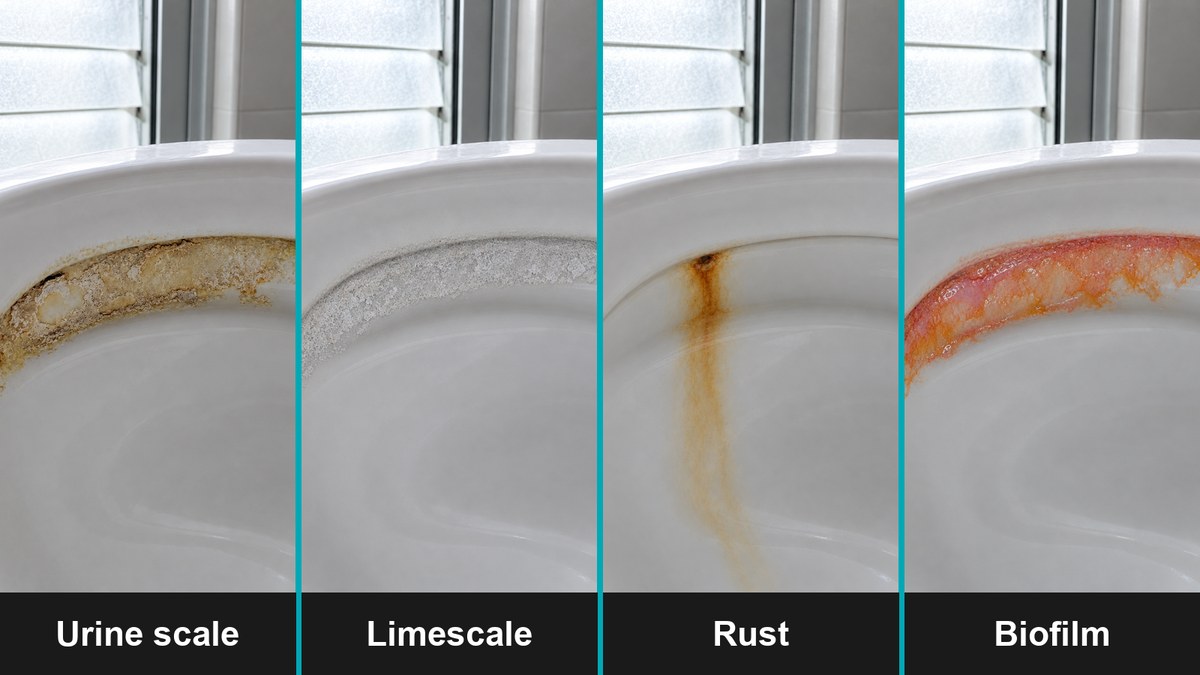
The first two get mixed up the most. A homeowner scrubs a yellow crust for ten minutes, blames the water, and gives up. The crust is mostly dried urine, which is why it keeps coming back at the same spot.
You can sort your own toilet in five minutes. Look at the colour, press a plastic spoon edge against it, and note where it sits. Hard and flaky means scale. Soft and slippery means film. Smooth and orange means metal.
Match the cleaner to the stain
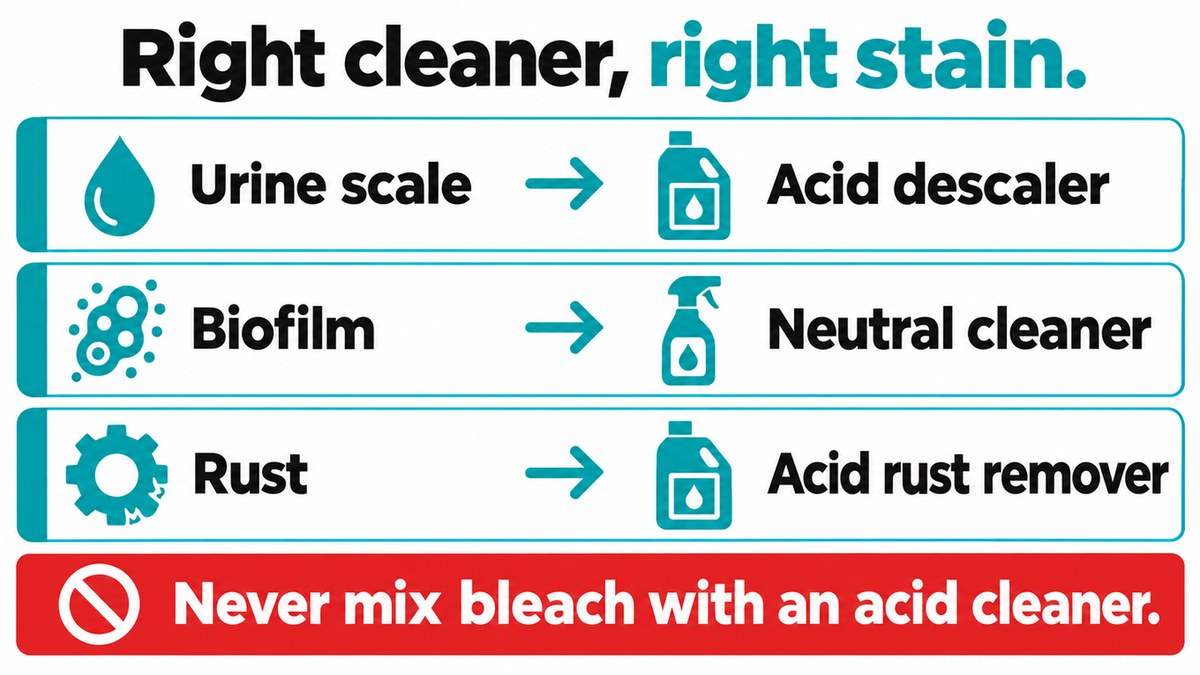
Using one product on everything is the usual mistake. These are the broad rules:
- Urine scale and limescale: an acid-based toilet descaler, used as the label says. Let it sit, then scrub under the rim and at the waterline. Acid is the right tool for mineral crust.
- Biofilm and soap scum: a neutral or mild alkaline cleaner and a brush. Scrub, then rinse well. Acid does little here.
- Rust: an acid-based rust remover works on the stain, but the stain returns if the source stays. Check the cistern fittings and flush parts for corroded metal.
Keep acid off grout, natural stone and metal fittings. Acid eats cement grout over time, which is one reason we steam grout instead of soaking it.
The one rule that matters most: never mix bleach with an acid cleaner. Many toilet descalers are acids, and vinegar is one too. Bleach plus acid gives off chlorine gas. The American Association of Poison Control Centers explains what chlorine gas does and what to do if you breathe it in.
Rinse the bowl fully between products. Open the window and run the exhaust fan. If you smell something sharp, leave the room and ventilate.
Avoid scouring pads and hard scrapers on glazed porcelain. Scratches hold stains, so the next one forms faster. For orange rust streaks on surfaces beyond the bowl, our rust stains removal service covers tiles, natural stone and concrete.
What a professional toilet deep clean covers
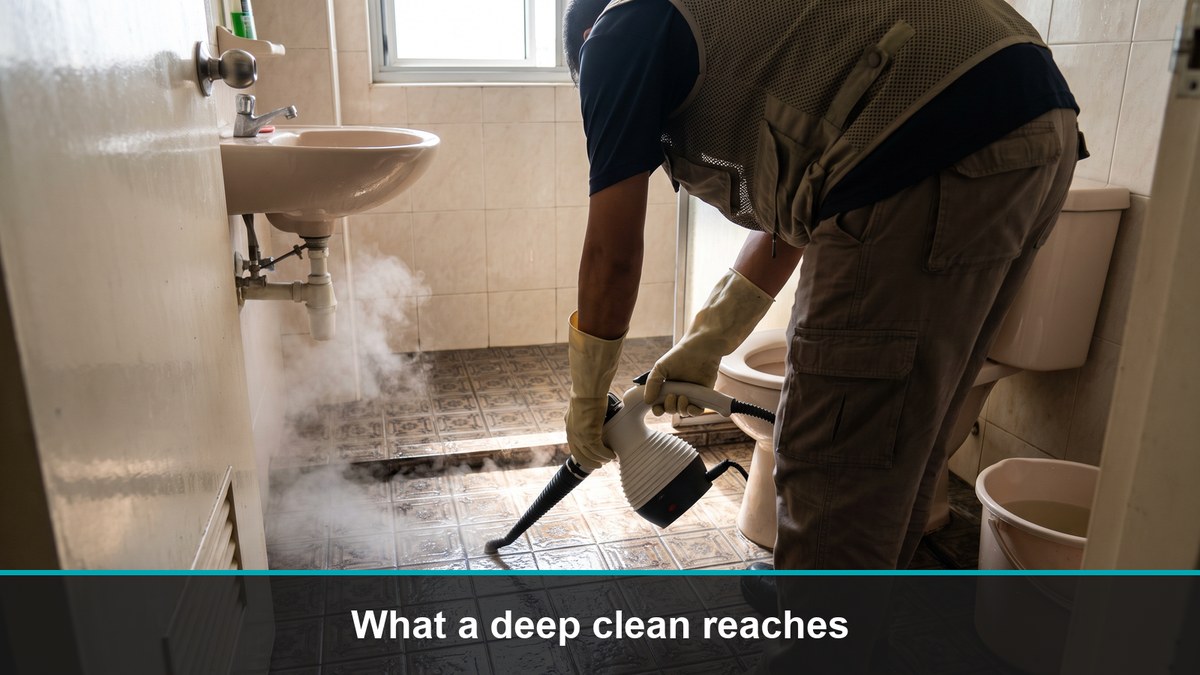
Daily cleaning handles the bowl and seat. A deep clean goes to the places that stay wet or get missed. For a typical HDB toilet, the checklist looks like this:
- Underside of the rim, where urine scale and film build up unseen
- Waterline crust inside the bowl
- Base of the bowl and the gap behind it, where splash and hair collect
- Cistern exterior, flush plate and bidet spray
- Floor trap and drain cover
- Grout lines and silicone along the floor and shower area
- Wall tiles, shower screen or curtain track
- Exhaust fan cover, door frame and light switch
EasyClean does this as part of our specialized cleaning services. Dark grout and black silicone get steam. If mould has spread past the toilet onto the ceiling or walls, that is a separate job, covered by our mould removal treatment.
Our toilet cleaning is priced from the flat and photos, not from a fixed menu. Send a few pictures and we will tell you what it needs.
How much does toilet deep cleaning cost?
A single toilet is quoted by EasyClean from the job itself, so we do not publish a flat figure. Three things move the price most: how many toilets, how old the deposits are, and the state of the grout.
If you want the whole flat done, our deep cleaning packages start from about $180 for a 3-room HDB, and the bathrooms are part of that visit. The full deep cleaning price guide lists typical ranges by flat type.
Doing it yourself costs a bottle of descaler and an afternoon. It works well for fresh scale. It struggles with crust that has built up for years under the rim, where you cannot see or reach. If you want to try first, our shop stocks toilet cleaners.
Keep the toilet from going back to day one
Most stains come back because of habits, not products. These small changes help in Singapore's humid toilets:
- Wipe under the rim and around the base once a week, not only the seat.
- Wipe up splash at the base the same day. Urine dries into scale fast.
- Run the exhaust fan or leave the door open after showers so the room dries.
- Rinse the mop head before it touches the bathroom floor, so grime stays out of the grout.
- If you see rust streaks, have the cistern fittings checked before you keep scrubbing.
When DIY stops working
Call a professional when the crust returns within a week of scrubbing, when the porcelain feels rough, or when the grout stays grey or black after cleaning. A smell that rises from the floor, not the bowl, usually points to the floor trap or drain.
Moving in or out? A toilet deep clean belongs on the checklist, since landlords look closely at black mould, soap scum and scale on fittings.
Frequently Asked Questions
What does toilet deep cleaning actually involve?
It covers the places daily cleaning misses: under the rim, the waterline, the base and the gap behind the bowl, the cistern exterior, the floor trap, grout and silicone, and the walls. The goal is to remove built-up scale and film, not just the surface marks.
Is limescale common in Singapore toilets?
Less than most people think. PUB's 2025 data show soft tap water, with average hardness of 42.7 mg/L. A white chalky film does happen, but yellow-brown crust is more often urine scale, and orange streaks usually come from rusting metal parts.
Will vinegar damage a toilet bowl?
Vinegar will not harm glazed porcelain in a short soak. It can dull cement grout and some metal fittings over time. The bigger risk is mixing it with bleach, which gives off chlorine gas. Never use the two together.
Can baking soda clean a toilet?
Baking soda is a mild scrub and helps with light film and odour. It will not dissolve a hard urine scale crust. For that you need an acid-based descaler, used as the label directs.
How do I clean the grime at the bottom of the toilet?
Wipe the base, the gap behind the bowl and the floor line with a neutral cleaner and a cloth. For dark grout, scrub with a brush. If it stays dark, it is soaked in, and steam cleaning works better than harsher chemicals.
The short version
Most toilet stains in Singapore are urine scale, biofilm or rust, not limescale, because our tap water is soft. Match the cleaner to the stain, never mix bleach with acid, and clean the places you cannot see.
EasyClean SG holds a 4.9-star rating from more than 422 Google reviews. Send your flat type and a few toilet photos through our contact page and we will tell you what it needs.
Reviewed and fact-checked by Bobby Dennie, Rezult